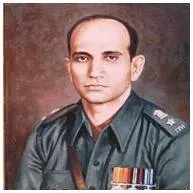
Lt. Col. Ardeshir Burzorji Tarapore, born in Mumbai, Maharashtra, was a highly respected Indian Army officer whose fearless leadership during the 1965 Indo-Pak War earned him the prestigious Param Vir Chakra, making him one of India’s most honoured and inspirational military heroes whose legacy continues to shape the nation’s pride and military history. Known as the “Tiger of Poona Horse,” Lt. Col. Ardeshir Tarapore led one of the most powerful tank offensives of the 1965 War. His extraordinary courage, strategic brilliance, and refusal to retreat make him a name etched forever in India’s military history.
Early Life & Challenges :
Lt. Col. Ardeshir Burzorji Tarapore was born on 18 August 1923 in Mumbai (then Bombay) into a humble Parsi family that deeply valued discipline, honesty, and service to the nation, and from a young age he displayed an unusual mix of curiosity, courage, and responsibility; raised by his father Burzorji Tarapore, who worked in the postal department, and his mother Perin Tarapore, who encouraged strong moral values, Ardeshir grew up in a modest home where financial challenges were common, yet he remained determined, often balancing studies with helping at home, and it was during these formative years that he developed a fascination for soldiers and stories of bravery, dreaming of wearing the uniform himself one day; however, his journey was not easy—he suffered a major injury during school that nearly shattered his hopes of joining the armed forces, but his resilience pushed him to recover fully, and despite limited resources and constant obstacles, he continued to pursue his passion until he finally joined the Hyderabad State Forces, marking the beginning of a remarkable journey that would transform a young dreamer into one of India’s greatest military heroes.
Turning Point :

The Recognition & Award:
Lt. Col. Ardeshir Burzorji Tarapore’s unmatched bravery during the 1965 Indo-Pak War earned him the Param Vir Chakra, India’s highest gallantry award, bestowed upon him posthumously for his extraordinary leadership and fearless determination in the Battle of Chawinda. Despite being injured early in the battle, he refused medical evacuation and continued leading his regiment—The Poona Horse—with unwavering courage, executing multiple tank assaults that destroyed several enemy positions and changed the momentum of the war. His official Param Vir Chakra citation praised him for “conspicuous gallantry, leadership, and supreme devotion to duty,” highlighting how his actions inspired every soldier under his command.
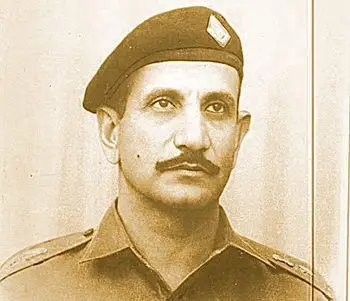
Today, his medal, his regiment’s honours, and numerous memorials across India stand as powerful reminders of a hero whose dedication to the nation remained unshaken till his final breath.
What Changed After the Award :
- National Recognition: Lt. Col. Tarapore became a symbol of exceptional bravery, and his Param Vir Chakra brought nationwide acknowledgement of his unmatched courage during the 1965 War.
- Regiment Legacy: His regiment, The Poona Horse, proudly adopted his name in honour rolls and battle histories, ensuring every new officer learns about his leadership.
- Military Curriculum: His strategies and battlefield decisions became part of training modules in Indian military academies, inspiring future officers.
- Public Memorials: Statues, plaques, and memorials were established across India—especially in Maharashtra—ensuring people remember his sacrifice.
- Community Pride: The Parsi community celebrates him as one of its most courageous sons, honouring him during cultural and national events.
- Annual Commemorations: The Indian Army honours him during Param Vir Chakra Day and 1965 War remembrance ceremonies, keeping his story alive for new generations.
- Historical Documentation: Books, documentaries, and army journals recorded his life and battlefield actions, giving him a permanent place in India’s military history.
- Inspiration for Youth: His story encouraged countless young Indians to join the armed forces, seeing him as a role model of discipline and courage.
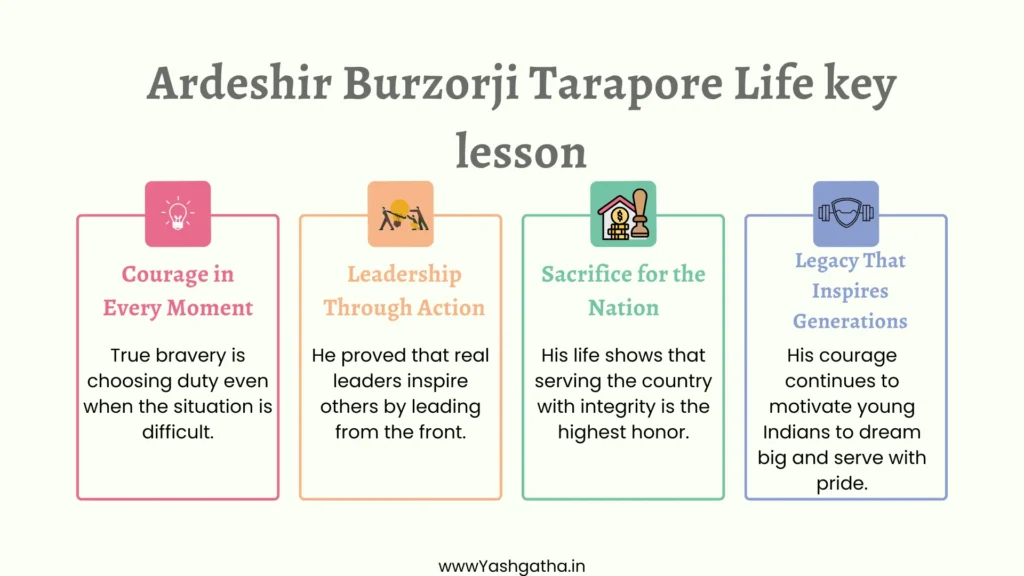
Yashgatha Takeaways:
Related posts:
 Lt. Arun Khetarpal: The 21-Year-Old Tank Warrior Who Changed the 1971 War
 The Iron-Willed Leader: How Morarji Desai Redefined Power with Truth and Simplicity
 Lt. Hari Chand MVC: The Fearless Indian Army Hero Who Wrote History with Courage
 India’s First Maha Vir Chakra Awardee: The Untold Story of Lt. Col. Dewan Ranjit Rai