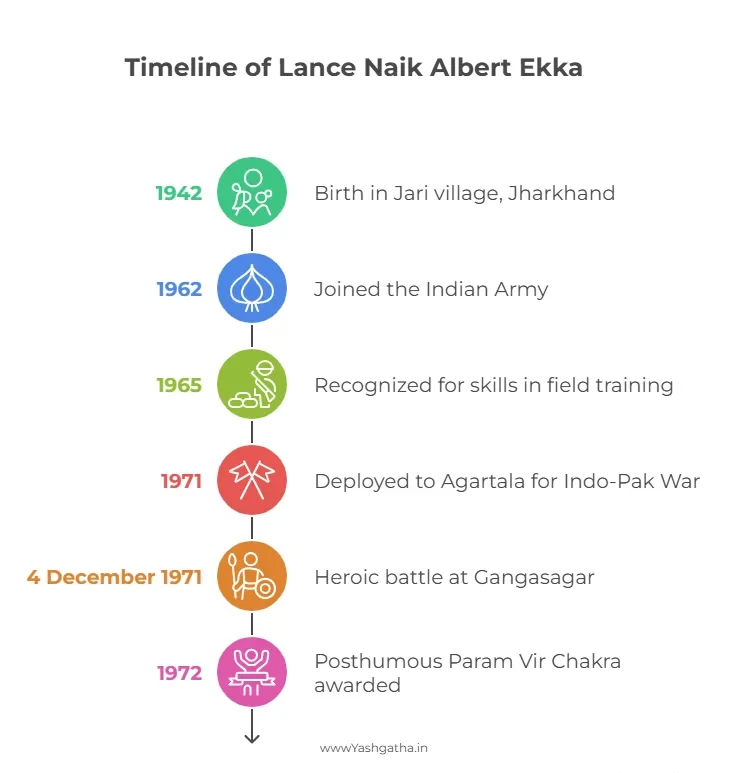
Lance Naik Albert Ekka was born on 27 December 1942 in Jari village, Gumla district, Jharkhand, into a humble tribal Christian family; he received his early education locally while helping his family in farming, developed exceptional physical skills in the hilly terrain of his village, and later joined the Indian Army, where he served in the Bihar Regiment and 14 Guards, demonstrating unparalleled bravery that ultimately earned him the Param Vir Chakra posthumously for his heroism during the 1971 Indo-Pak War. Lance Naik Albert Ekka, the fearless soldier from a small tribal village in Jharkhand, became one of India’s greatest battlefield heroes during the 1971 Indo-Pak War. With unmatched courage, he charged through enemy fire, destroyed key bunkers, and ensured India’s victory at Gangasagar—earning the nation’s highest military honor, the Param Vir Chakra. His story is a timeless reminder that true bravery often rises from the most humble beginnings.
Early Life & Challenges:
Lance Naik Albert Ekka was born on 27 December 1942 in Jari village, in the Gumla district of Jharkhand, into a modest tribal Christian family. Growing up in a remote village surrounded by forests and hills, life was far from easy. His family depended on farming for their livelihood, and young Albert often helped in the fields, learning discipline, hard work, and resilience from an early age. Despite limited resources, he attended the local school, walking long distances each day, and developed a love for learning alongside a strong sense of responsibility toward his family. Physical endurance and survival skills came naturally to him as he navigated the rugged terrain of his village.
Life in such a remote region presented many challenges:
- Poverty and limited resources meant opportunities for formal education and modern amenities were scarce.
- Geographical isolation made access to markets, hospitals, and infrastructure difficult.
- Family responsibilities required him to mature quickly and contribute actively to household chores.
Yet, these challenges shaped Albert into a disciplined, courageous, and determined young man. His early experiences in the forests and fields honed the qualities that later made him a fearless soldier on the battlefield. From a small tribal village to the frontlines of war, his journey reflects the triumph of courage, determination, and patriotism over adversity.
The Turning Point :
The Recognition & Award:
Lance Naik Albert Ekka’s extraordinary bravery during the Battle of Gangasagar in the 1971 Indo-Pak War did not go unnoticed. Despite being critically injured while assaulting enemy bunkers, he single-handedly destroyed multiple enemy positions, ensuring the advance of his unit and contributing significantly to India’s victory in the battle. In recognition of his unmatched courage and ultimate sacrifice, Albert Ekka was posthumously awarded the Param Vir Chakra in 1972, India’s highest military honor for valor in the face of the enemy. This prestigious award placed him among the nation’s most revered heroes and immortalized his name in Indian military history.
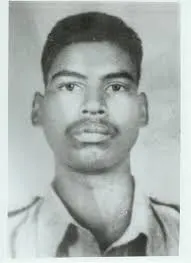
Key Highlights of the Recognition:
- Highest Military Honor: Param Vir Chakra (PVC)
- Date Awarded: 1972 (Posthumous)
- Reason: Exceptional bravery and sacrifice in the Battle of Gangasagar, 1971
- Legacy: His heroism inspired generations of soldiers and is commemorated through statues, memorials, and military training programs across India.
What Changed After the Award :
- National Recognition: Albert Ekka became a celebrated war hero, remembered across India for his courage and sacrifice.
- Memorials & Statues: A statue at Albert Ekka Chowk in Ranchi and other memorials honor his legacy.
- Inspiration for Soldiers: His story is included in military training programs to inspire bravery and dedication.
- Family Support & Honor: His family received recognition, support, and respect from the nation.
- Legacy in Education & Public Spaces: Schools, roads, and institutions were named after him, keeping his memory alive.
- Motivation for Generations: His life became a symbol of courage for both civilians and armed forces, proving that heroism can come from humble beginnings.
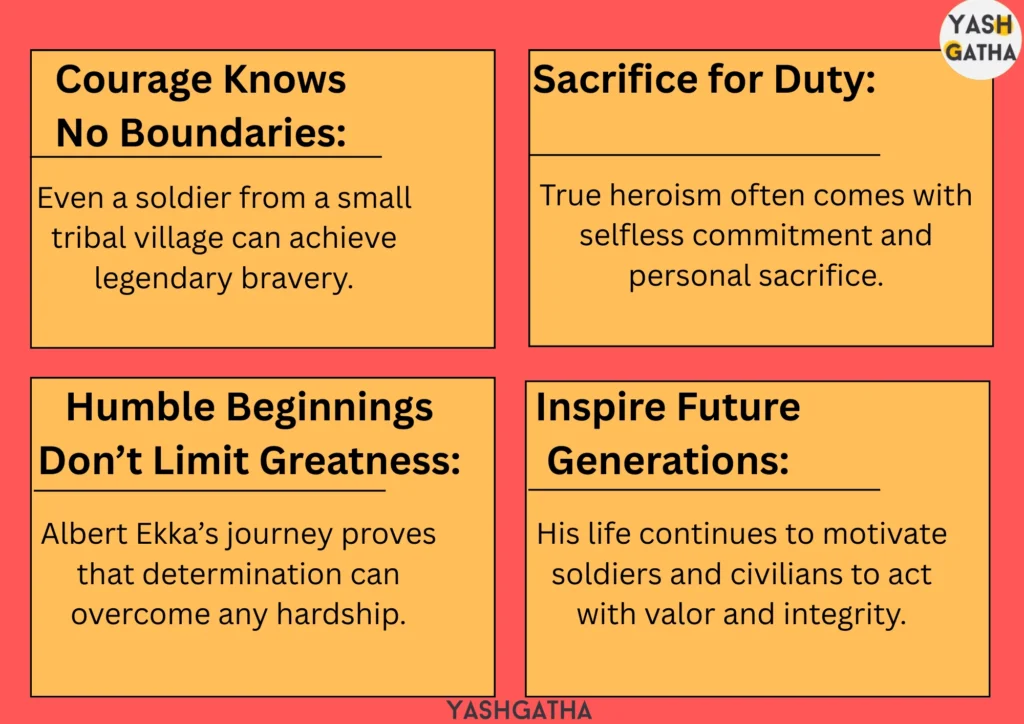
Yashgatha Takeaways:
Related posts:
 From Soldier to Legend: How Major Somnath Sharma Became India’s First Param Vir Chakra Warrior
 India’s Quiet Warrior: How Major Parameswaran Became a Param Vir Chakra Legend
 The Fearless Legacy of CHM Piru Singh Shekhawat – India’s Param Vir Chakra Legend
 The Incredible True Story of Rama Raghoba Rane – India’s Legendary Param Vir Chakra Warrior