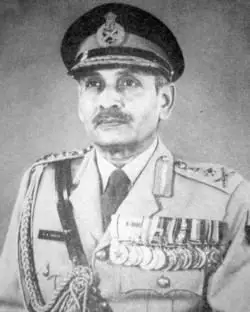
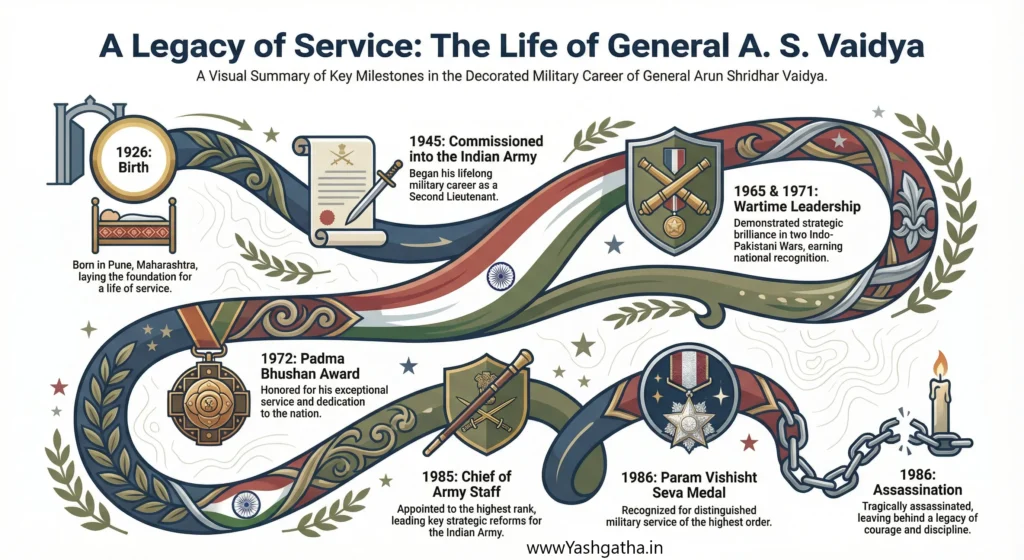
Arun Shridhar Vaidya, born in Pune, Maharashtra, was a legendary Indian Army General and former Chief of Army Staff, honored with the Padma Bhushan and Param Vishisht Seva Medal for his exceptional leadership, courage, and service to the nation. Arun Shridhar Vaidya was more than just a soldier; he was a symbol of courage, discipline, and unwavering commitment to his country. Rising from humble beginnings in Pune, Maharashtra, Vaidya dedicated his life to serving India, leading troops through some of the nation’s most critical and challenging times. Known for his strategic brilliance and fearless leadership, he eventually became the Chief of Army Staff, earning the nation’s highest honors, including the Padma Bhushan and Param Vishisht Seva Medal. His life is a remarkable story of resilience, dedication, and legacy that continues to inspire generations.
Early Life & Challenges :
Arun Shridhar Vaidya was born in 1926 in Pune, Maharashtra, into a disciplined Marathi family that valued education, ethics, and service to the nation. From a young age, he displayed an exceptional sense of responsibility and a keen interest in leadership and strategy. Growing up during pre-independence India, Vaidya faced numerous challenges. Resources were limited, opportunities were scarce, and societal expectations often favored conventional careers over military service. Despite these obstacles, his determination to serve his country never wavered.
He pursued his dream by joining the Indian Military Academy (IMA) in Dehradun, a highly competitive institution where only the most disciplined and talented candidates could succeed. Life at the academy was tough—rigorous physical training, strict discipline, and mental resilience were demanded every day. But Vaidya thrived under pressure, excelling in both academics and leadership exercises.
His early postings in the army were equally challenging. He served in remote and high-risk regions, often in harsh conditions that tested his endurance and strategic skills. These formative experiences shaped him into a leader who was not only tactically brilliant but also deeply respected by his peers and subordinates. Despite adversity, Arun Shridhar Vaidya’s early life laid the foundation for a career marked by courage, dedication, and an unwavering commitment to his nation.
The Turning Point :
The Recognition & Award:
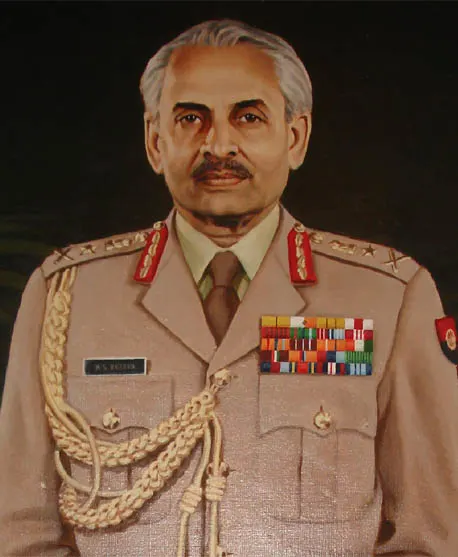
Arun Shridhar Vaidya’s dedication and exemplary service to the Indian Army earned him some of the nation’s highest honors, cementing his legacy as one of India’s greatest military leaders.
Key Awards & Honors:
- Padma Bhushan (1972): Awarded for his distinguished service to the nation in the field of defense.
- Param Vishisht Seva Medal (1986): Recognized for his outstanding leadership, courage, and strategic excellence.
- Chief of Army Staff (1985–1986): Appointment as the top position in the Indian Army, marking the pinnacle of his military career.
What Changed After the Award :
Receiving the Padma Bhushan (1972) and later the Param Vishisht Seva Medal (1986) marked major milestones in Arun Shridhar Vaidya’s life and career. These honors not only recognized his past achievements but also opened new avenues of responsibility and influence:
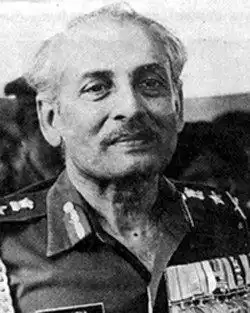
- National Recognition: Vaidya became widely known and respected across India as a symbol of courage and leadership.
- Top Military Leadership: His appointment as Chief of Army Staff (1985–1986) allowed him to implement strategic reforms and modernization in the Indian Army.
- Mentorship Role: He took an active role in training and mentoring the next generation of Indian military officers.
- Legacy Cemented: His life and achievements became an inspiration, with his strategies and discipline studied by officers and military historians alike.
- Public Influence: Beyond the army, he became a figure representing integrity, dedication, and national service.
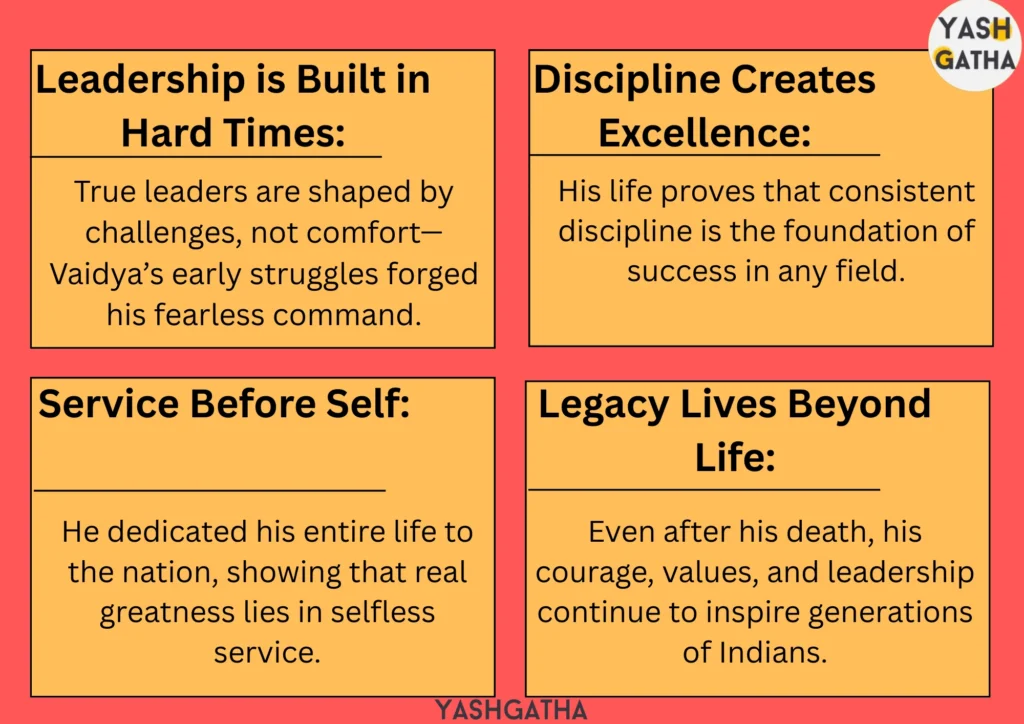
Yashgatha Takeaways:
Related posts:
 The Untold Story of Daya Ram Thapar, MVC — The General Who Shaped India’s Military Future.
 Man Mohan Khanna MVC: The Forgotten Hero Whose Bravery Shaped India’s Early Military History
 Maharaja Hari Singh (1895–1961): A Controversial Monarch Who Shaped Indian History
 Lt. Hari Chand MVC: The Fearless Indian Army Hero Who Wrote History with Courage