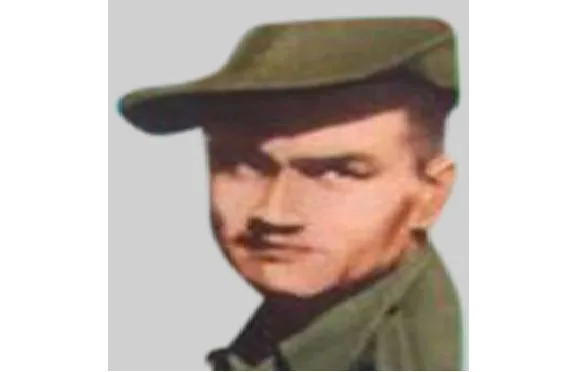
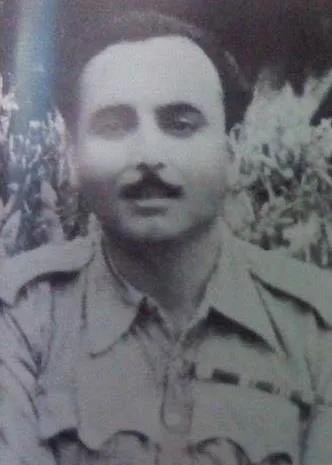
Lieutenant Colonel Dewan Ranjit Rai (1913–1947) was a brave Indian Army officer of the 1 Sikh Regiment and the first recipient of the Maha Vir Chakra (posthumous), who laid down his life while leading from the front in the 1947 Indo-Pak War to defend Kashmir.
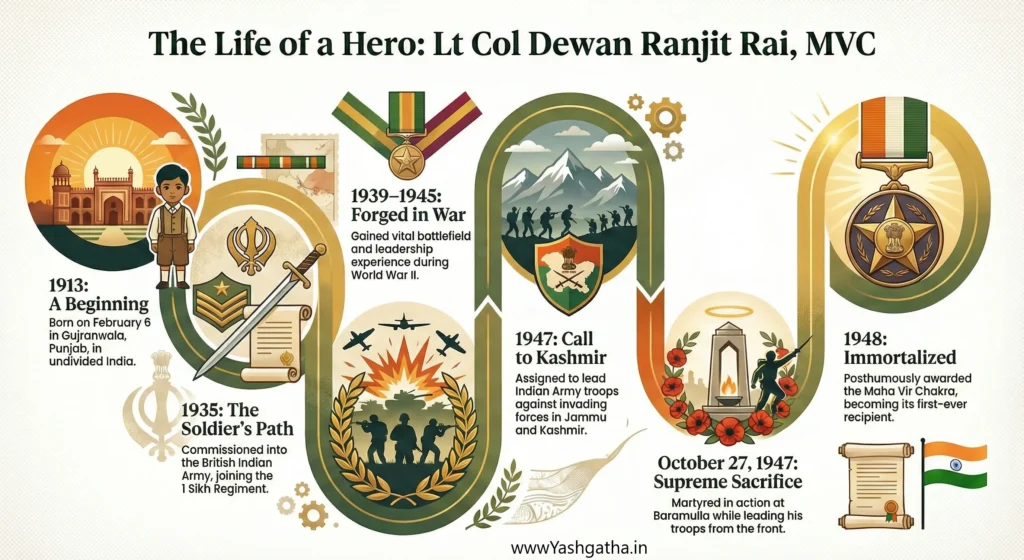
In the fragile days after India’s independence, when the nation was still finding its footing, one soldier stood firm against chaos. Lieutenant Colonel Dewan Ranjit Rai, a young officer of the 1 Sikh Regiment, became one of the first defenders of a free India. On 27 October 1947, in the mountains of Baramulla, Kashmir, he led his men from the front against invading forces. He did not return — but he ensured that Kashmir had a fighting chance. His courage made him the first recipient of the Maha Vir Chakra (Posthumous), and his sacrifice placed his name forever among the earliest heroes of independent India.
Early Life & Challenges :
Lieutenant Colonel Dewan Ranjit Rai was born on 6 February 1913 in Gujranwala, Punjab Province (now in Pakistan), at a time when India was still under British rule. Growing up in pre-independence India meant living in an atmosphere of political uncertainty, social change, and rising nationalist spirit. These surroundings deeply influenced his character and sense of duty.
From a young age, Ranjit Rai displayed qualities that set him apart — discipline, physical toughness, and quiet leadership. While detailed records of his childhood are limited, his later life reflected a strong foundation built on perseverance and moral strength. Choosing a military career in the 1930s was not an easy path; it required leaving family behind, enduring strict training, and committing to a life where danger was constant.
In 1935, he joined the British Indian Army, beginning a journey that demanded mental resilience and physical endurance. As a young officer in the 1 Sikh Regiment, he faced the dual challenge of mastering modern warfare while commanding men older and more experienced than himself. Winning their respect required courage, fairness, and example — qualities he consistently demonstrated.
His early service years were shaped by the pressures of World War II, which tested him under real combat conditions. The war exposed him to the harsh realities of leadership: making life-or-death decisions, protecting his soldiers, and operating in unpredictable environments. These experiences forged him into a hardened, dependable officer. Another major challenge came with India’s independence in 1947. The Partition brought confusion, violence, and the urgent task of building a new national army. Amid this instability, Dewan Ranjit Rai chose to continue serving, now under the Indian flag. Just weeks later, the crisis in Kashmir erupted — setting the stage for the ultimate test of his life.
The Turning Point :
The Recognition & Award:
In recognition of his extraordinary bravery, outstanding leadership, and supreme sacrifice while commanding his troops during the critical early hours of the 1947 Indo-Pak War in Kashmir, Lieutenant Colonel Dewan Ranjit Rai was posthumously awarded the Maha Vir Chakra, India’s second-highest gallantry award, and thus became the first officer in the nation’s history to receive this honour, ensuring that his name would forever remain among the earliest war heroes of independent India.
What Changed After the Award:
Although Lieutenant Colonel Dewan Ranjit Rai was no longer alive to witness the honour, the Maha Vir Chakra transformed his sacrifice into a permanent national legacy.
After the Maha Vir Chakra, his life became a legacy:
- He was recorded in history as the first Maha Vir Chakra awardee of independent India.
- His name was immortalized in Indian Army honours lists and regimental traditions.
- His bravery began to be taught and referenced in military institutions and war histories.
- He came to be remembered as one of the earliest martyrs who defended Kashmir.
- His sacrifice earned a place in national memory, memorials, and commemorations.
- From an officer, he became a symbol of courage, duty, and supreme sacrifice.
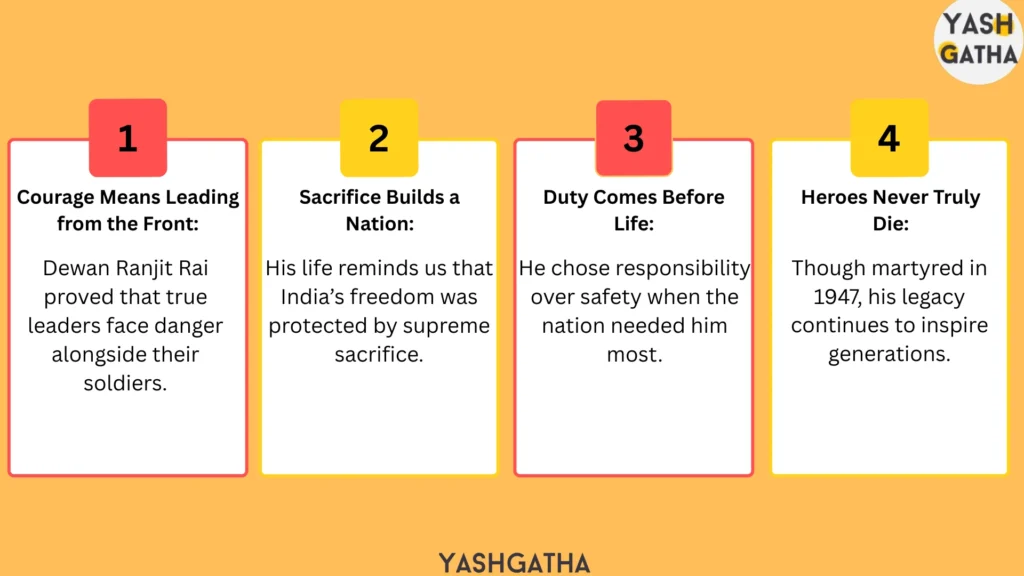
Yashgatha Takeaways:
Related posts:
 He Was Shot Saving His Men: The Untold Maha Vir Chakra Story of Lt. Satyapal Chopra
 From Soldier to Legend: The Extraordinary Story of Maha Vir Chakra Winner Nand Singh
 From Dhobi to Hero: The Incredible True Story of Ram Chander, India’s Civilian MVC Awardee
 Chewang Rinchen: The Real-Life Hero of Ladakh Who Won the Maha Vir Chakra Twice