Naik Chand Singh (1922–1947) of the 1st Sikh Regiment was a brave Indian soldier who displayed extraordinary heroism in the Uri sector during the 1947 Indo-Pak War and was posthumously awarded the Maha Vir Chakra for his supreme sacrifice.
In the fragile days after India’s independence, when the nation was still finding its footing, one soldier stood firm against chaos. Lieutenant Colonel Dewan Ranjit Rai, a young officer of the 1 Sikh Regiment, became one of the first defenders of a free India. On 27 October 1947, in the mountains of Baramulla, Kashmir, he led his men from the front against invading forces. He did not return — but he ensured that Kashmir had a fighting chance. His courage made him the first recipient of the Maha Vir Chakra (Posthumous), and his sacrifice placed his name forever among the earliest heroes of independent India.
Early Life & Challenges :
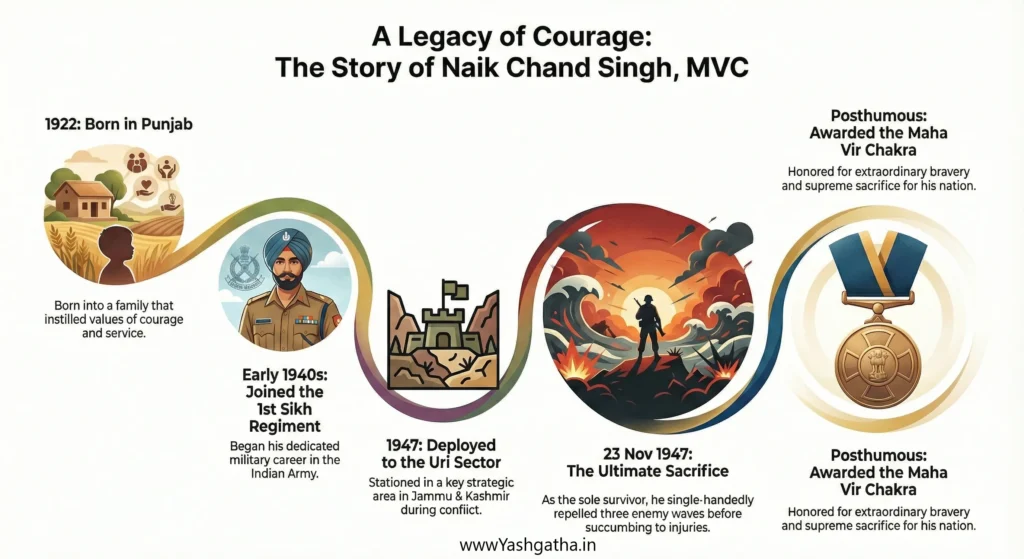
Naik Chand Singh was born in 1922 in Punjab, a land renowned for its warrior tradition and resilient spirit. Growing up in a modest family, Chand Singh experienced the realities of a simple yet disciplined rural life. From a young age, he was instilled with values of hard work, courage, and responsibility—qualities that would later define him on the battlefield.
Education and opportunities were limited, but Chand Singh showed determination to serve a greater purpose. Inspired by the legacy of Sikh soldiers and the call of duty, he chose the path of the military, joining the 1st Sikh Regiment, one of India’s most respected infantry units.
Life as a soldier was not easy. Training was rigorous, and discipline was strict, testing both physical endurance and mental strength. Chand Singh faced harsh conditions, long marches, and intense drills, but these challenges only strengthened his resolve.
When the Indo-Pak War broke out in 1947, these early lessons of courage, discipline, and perseverance prepared him for a defining moment in history. Chand Singh’s upbringing and training had forged a soldier capable of extraordinary bravery, ready to face overwhelming odds in defense of his nation.
The Turning Point :
The Recognition & Award:
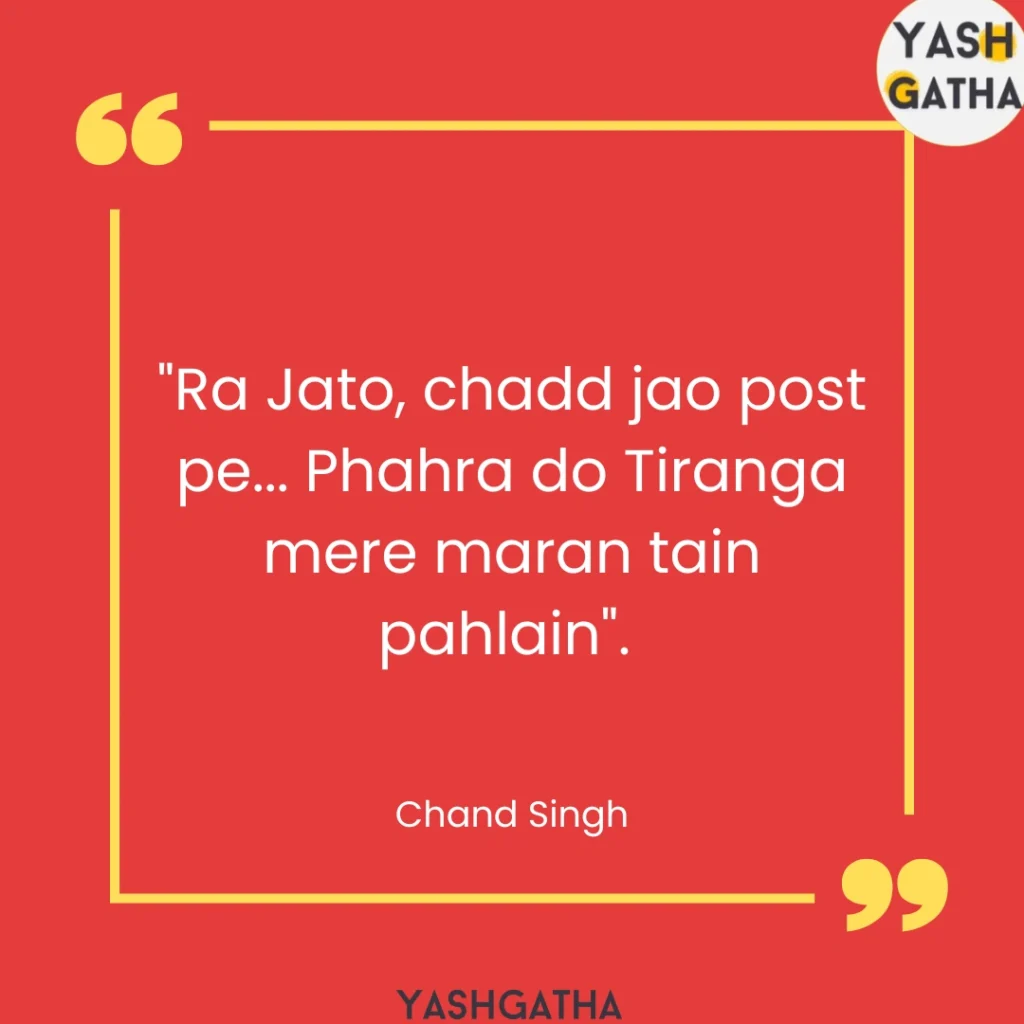
For his unparalleled courage and selfless sacrifice during the Indo-Pak War of 1947, particularly in the fierce battles of the Uri sector in Jammu & Kashmir, Naik Chand Singh of the 1st Sikh Regiment was posthumously awarded the Maha Vir Chakra (MVC), India’s second-highest wartime gallantry award. Facing three successive waves of enemy attacks, Chand Singh fought with a Light Machine Gun and grenades, refusing to retreat even when he became the sole survivor of his section. His exceptional leadership, determination, and bravery not only held the forward picket against overwhelming odds but also saved countless lives and secured a critical position for the Indian Army. The award recognized his extraordinary heroism, courage under fire, and unwavering commitment to duty, making him a lasting symbol of patriotism and sacrifice. Even decades later, Naik Chand Singh’s name continues to inspire soldiers, historians, and citizens, reminding the nation of the ultimate price paid to defend its sovereignty.
What Changed After the Award :
Although Naik Chand Singh received the Maha Vir Chakra posthumously, his bravery created a lasting impact on the nation, the army, and future generations. His sacrifice continues to inspire, and several significant changes followed:
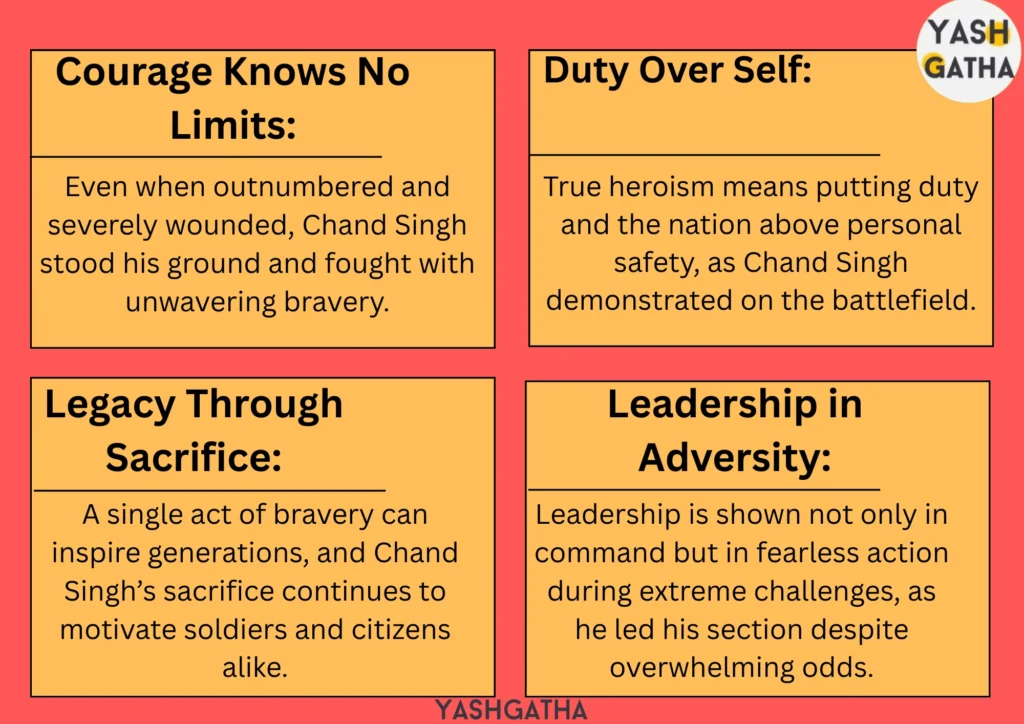
- National Recognition: Chand Singh became a symbol of courage and patriotism, remembered in military history books and public memory.
- Inspiration for Soldiers: His story is studied in the Indian Army as an example of leadership, bravery, and duty under extreme circumstances.
- Memorials & Tributes: His name is honored in regimental memorials, military ceremonies, and remembrance events in India.
- Historical Significance: The battle in the Uri sector, and his heroic role, became a part of India’s post-independence military legacy, highlighting the sacrifices made during the early conflicts.
- Motivational Legacy: His unwavering courage inspires young citizens and aspiring soldiers, demonstrating that true heroism is defined by action, not recognition.
Yashgatha Takeaways:
Related posts:
 Khushal Chand MVC: How One Brave Officer Became the ‘Saviour of Ladakh’
 Lt. Hari Chand MVC: The Fearless Indian Army Hero Who Wrote History with Courage
 The Untold Story of Major Dhan Singh Thapa — The Hero Who Defended Pangong Against Impossible Odds
 The Hero Who Defended India Against All Odds: Major Shaitan Singh’s Legacy