Jemadar Nand Singh (1914–1947) was a fearless Indian Army officer and one of the very few soldiers in history to be awarded both the Victoria Cross and the Maha Vir Chakra for his extraordinary bravery and supreme sacrifice in battle. On the cold battlefields of 1947, when survival itself was uncertain, one man chose to walk forward while others took cover. Jemadar Nand Singh did not fight for medals or memory — he fought because courage demanded it. Rising from a humble background, he went on to become one of the rare soldiers in history to be awarded both the Victoria Cross and the Maha Vir Chakra. His life is not just a chapter in military history; it is a timeless story of leadership, sacrifice, and unbreakable spirit.
Early Life & Challenges:
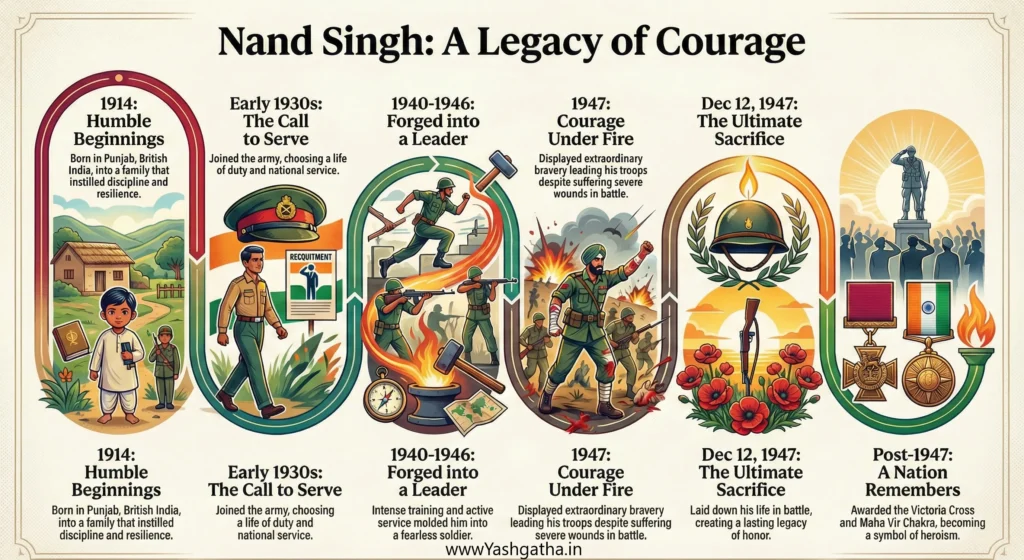
Jemadar Nand Singh was born on 24 September 1914 in the Punjab region of British India, into a modest family where life revolved around hard work, discipline, and community values. His childhood was shaped by simplicity rather than comfort. From an early age, he learned the meaning of responsibility, endurance, and self-reliance—qualities that would later define his military career. Growing up in pre-independence India was not easy. Opportunities were limited, and daily life demanded physical and mental toughness. Nand Singh witnessed firsthand the struggles of ordinary people, which quietly built within him a deep sense of duty and resilience. He was known as a calm, determined young man who did not seek attention, but never stepped back from effort or hardship.
The decision to join the army was both practical and purposeful. Military training tested him relentlessly—long marches, harsh conditions, and strict discipline pushed him to his limits. Yet, instead of discouraging him, these challenges strengthened his resolve. He developed a reputation for reliability, courage, and leading by example. Before he ever faced the battlefield, Nand Singh had already fought many silent battles—against poverty, exhaustion, and uncertainty. Those early struggles forged the inner strength that would one day turn him into one of the bravest soldiers in Indian military history.
The Turning Point :
The Recognition & Award:
Jemadar Nand Singh’s courage did not go unnoticed. His actions on the battlefield in 1947 stood out not only for their bravery, but for the extraordinary leadership and determination he showed in the face of extreme danger. Leading from the front, he continued his mission even after being seriously wounded, inspiring his men and changing the course of the operation. For this unparalleled act of gallantry, he was awarded the Victoria Cross (VC) — the highest and most prestigious military decoration for valor in the face of the enemy awarded to British and Commonwealth forces. This honor placed him among a rare group of soldiers whose courage is recognized at the very highest level of military history.
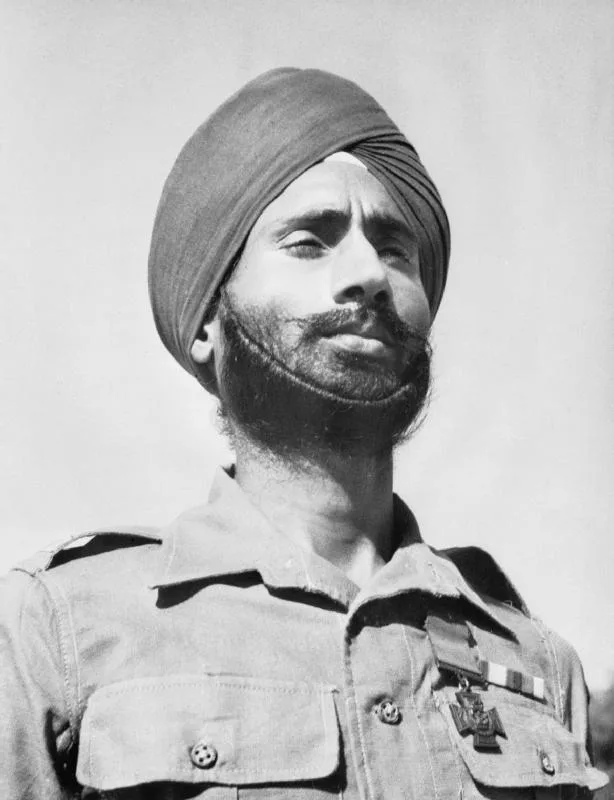
After India became independent, the nation also honored his supreme sacrifice by posthumously awarding him the Maha Vir Chakra (MVC), India’s second-highest wartime gallantry award. With this, Jemadar Nand Singh became one of the very few soldiers to receive both the Victoria Cross and the Maha Vir Chakra, a distinction that speaks volumes about the magnitude of his heroism. His medals are not merely decorations — they are reminders of a life lived in service, of courage that did not retreat, and of sacrifice that continues to inspire generations.
What Changed After the Award :
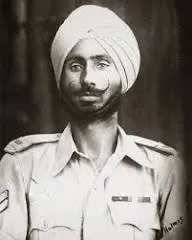
Jemadar Nand Singh’s medals were not just honors — they transformed his life story into a national legacy. After the Victoria Cross and the posthumous MahaVir Chakra, his courage began to live far beyond the battlefield.
Lasting Impact of His Bravery
- National Recognition: He was remembered as one of the rare soldiers to receive both the VC and MVC, placing him among the highest ranks of war heroes.
- Immortal Legacy: His name became permanently recorded in Indian and Commonwealth military history.
- Source of Inspiration: His story continues to motivate soldiers, students, and citizens to value courage, discipline, and service.
- Military Example: His actions are often cited as a model of fearless leadership and leading from the front.
- Tributes & Memorials: His sacrifice is honored through memorials, records, and commemorations.
- Educational Influence: His life is shared in articles, museums, and history discussions to teach the meaning of true heroism.
Though he did not live to see the honors himself, the awards ensured that his courage would never fade into silence.
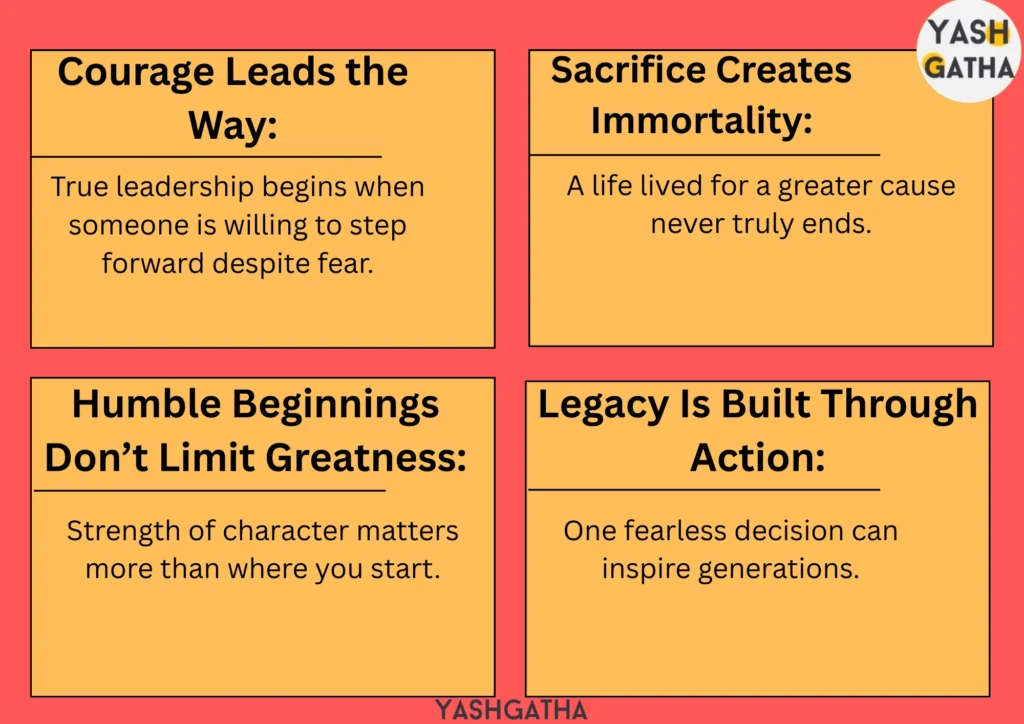
Yashgatha Takeaways:
Related posts:
 Major General Rajinder Singh “Sparrow” MVC: The Indian Army Legend Who Won the Maha Vir Chakra Twice
 From Soldier to Legend: How Major Somnath Sharma Became India’s First Param Vir Chakra Warrior
 India’s First Maha Vir Chakra Awardee: The Untold Story of Lt. Col. Dewan Ranjit Rai
 He Was Shot Saving His Men: The Untold Maha Vir Chakra Story of Lt. Satyapal Chopra