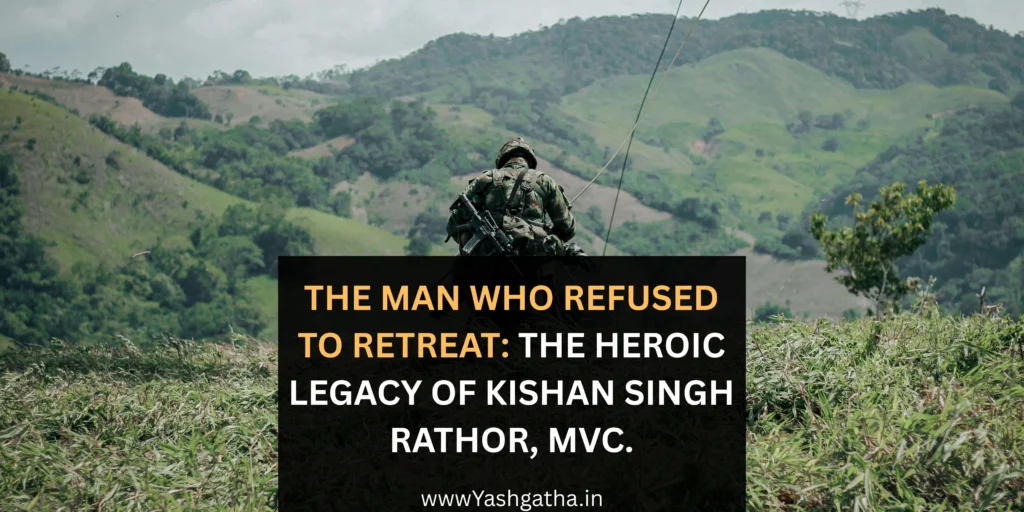
Lieutenant Kishan Singh Rathor, a brave officer of the Indian Army from Rajasthan, was posthumously awarded the Maha Vir Chakra in 1948 for his exceptional courage and supreme sacrifice while leading his troops from the front during the 1947–48 conflict. At a time when India was still finding its footing as a free nation, Lieutenant Kishan Singh Rathor stood firm on the battlefield, choosing courage over caution and duty over life itself. His fearless leadership during the 1947–48 conflict earned him the Maha Vir Chakra, making his story a timeless symbol of sacrifice and honor.
Early Life & Challenges:
Lieutenant Kishan Singh Rathore was born on 1 October 1923 in Rajasthan, with records linking his roots to Kota district and Ghadsisar (Sardarshahar) in Churu district. He belonged to the Rathore clan of the Rajput community, a lineage deeply associated with martial traditions, honor, and battlefield valor that stretched back centuries in Rajasthan’s history. Growing up in the arid rural landscapes of Rajasthan, Rathore was shaped by a culture that valued discipline, physical endurance, and service above self. Life in the desert region demanded resilience, and the Rajput ethos instilled from childhood emphasized courage in adversity and loyalty to duty. Though detailed records of his schooling remain limited, the environment of pre-independence Rajasthan, charged with nationalism and military aspiration, played a crucial role in forming his character.
The period of his youth coincided with India’s struggle for freedom and the upheaval of Partition, a time when the country urgently needed committed young leaders. Drawn by a strong sense of national duty, Rathore chose the path of a soldier at a young age and joined the Indian Army, receiving a Short Service Commission (SS-13659) soon after Independence. Entering military service during a time of chaos, limited resources, and active conflict posed immense challenges. As a young officer, Rathore had to lead men under extreme conditions—rugged terrain, harsh weather, and constant enemy pressure. Yet, his Rajput upbringing, mental toughness, and natural leadership enabled him to earn the trust of his soldiers quickly.
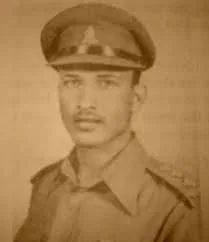
These early challenges forged Lieutenant Kishan Singh Rathore into a fearless leader—one who would later display extraordinary gallantry on the battlefields of Naushera, Tain Dhar, Kaman Gosha Dhar, and Jhangar, setting a benchmark for courage in the newly formed Indian Army.
Turning Point:
The Recognition & Award:
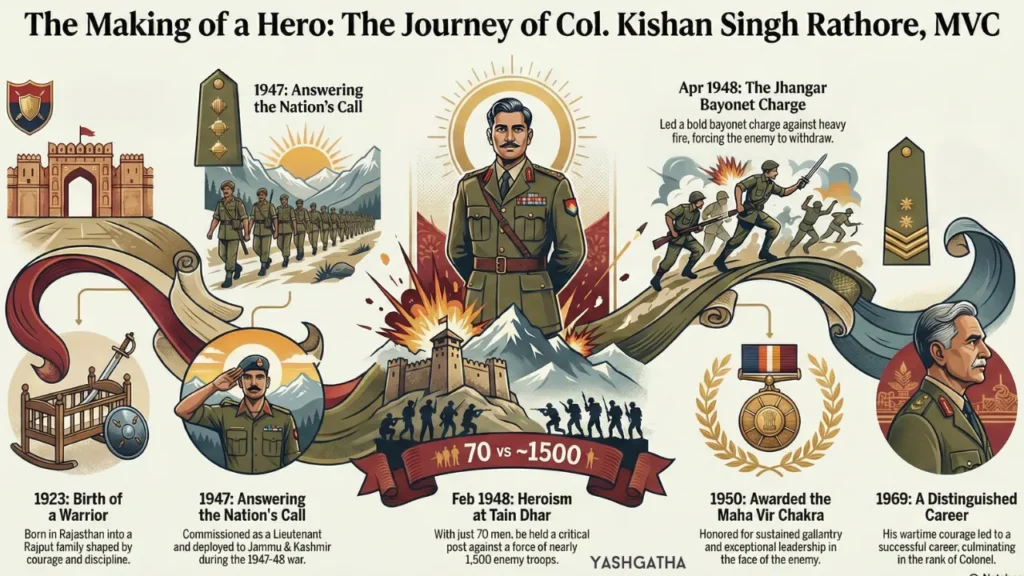
Lieutenant Kishan Singh Rathore’s exceptional bravery during the Indo-Pakistani War of 1947–1948 earned him the Maha Vir Chakra (MVC), India’s second-highest military decoration for gallantry in the presence of the enemy. His award recognized not one single act, but a series of courageous actions that demonstrated outstanding leadership, presence of mind, and devotion to duty under extreme combat conditions.
The official citation highlighted three major engagements that defined his gallantry:
- 6 February 1948 – Tain Dhar, Naushera:
Commanding a picquet of just 70 soldiers against an enemy force of nearly 1,500, Lt. Rathore repeatedly moved under intense fire to rally his men and personally distributed ammunition when casualties left no one else to do so. His leadership prevented a critical position from being overrun. - 5 March 1948 – Kaman Gosha Dhar:
Volunteering to lead a flanking attack, he later risked his life to recover the body of a fallen comrade from open ground swept by enemy fire, displaying courage beyond the call of duty. - 9 April 1948 – Near Jhangar:
When pinned down by heavy fire, he chose a determined bayonet charge instead of withdrawal, forcing the enemy to retreat and securing the objective.
In recognition of these acts of sustained gallantry, Lt. Kishan Singh Rathore was awarded the Maha Vir Chakra on 26 January 1950, during India’s first Republic Day Investiture Ceremony, presented by President Dr. Rajendra Prasad. Unlike many wartime awards, his MVC was not posthumous—he survived the war and went on to serve the Indian Army with distinction, eventually retiring as a Colonel.
What Changed After the Award:
Receiving the Maha Vir Chakra marked a defining moment in Lieutenant Kishan Singh Rathore’s life and career. While the honor recognized his wartime gallantry, it also set the course for his continued service and long-term impact within the Indian Army.
Life After the Maha Vir Chakra
- Regular Commission Granted (1948):
After the war, his Short Service Commission was converted into a regular commission, reflecting the Army’s confidence in his leadership and potential. - Continued Service in the Indian Army:
He remained in active service, contributing to unit discipline, training standards, and operational readiness during India’s formative military years. - Professional Growth & Promotions:
His battlefield experience and proven command abilities guided his steady rise through the ranks. - Promotion to Colonel (1969):
He attained the rank of Colonel, a testament to a distinguished career built on courage, competence, and integrity. - Role Model for Young Officers:
His Maha Vir Chakra citation became a teaching example of leadership under fire, often referenced within regimental traditions. - Enduring Military Legacy:
Remembered not only as a gallantry awardee but as an officer who embodied the values of the Rajput Regiment and the early Indian Army.
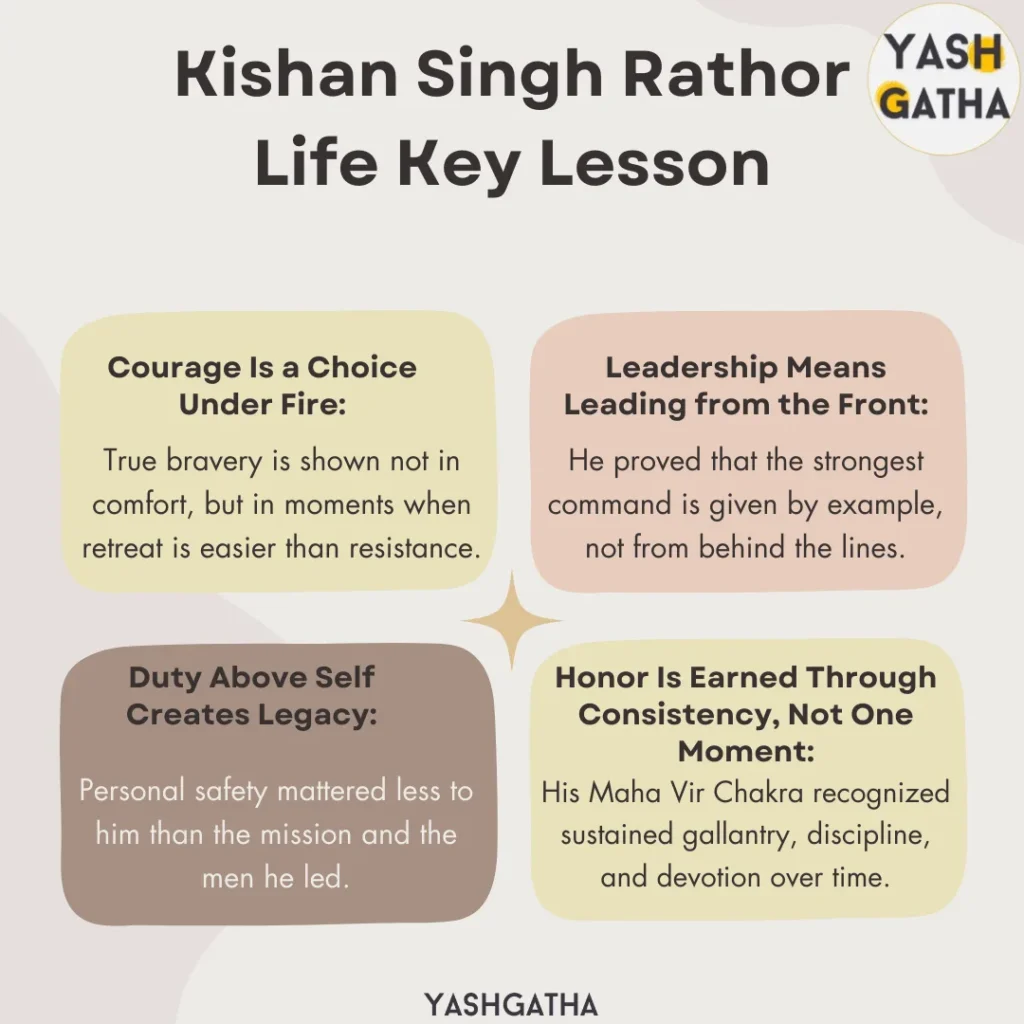
Yashgatha Takeaways: