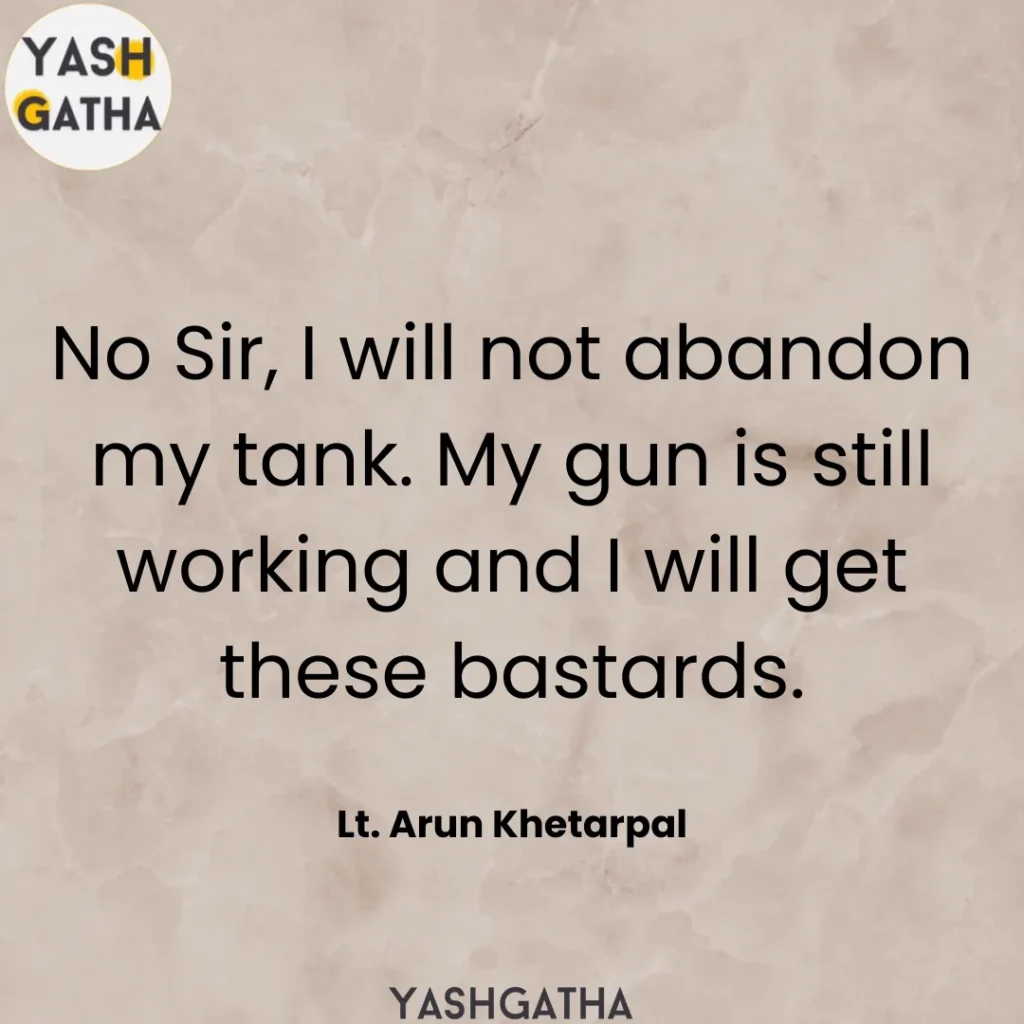
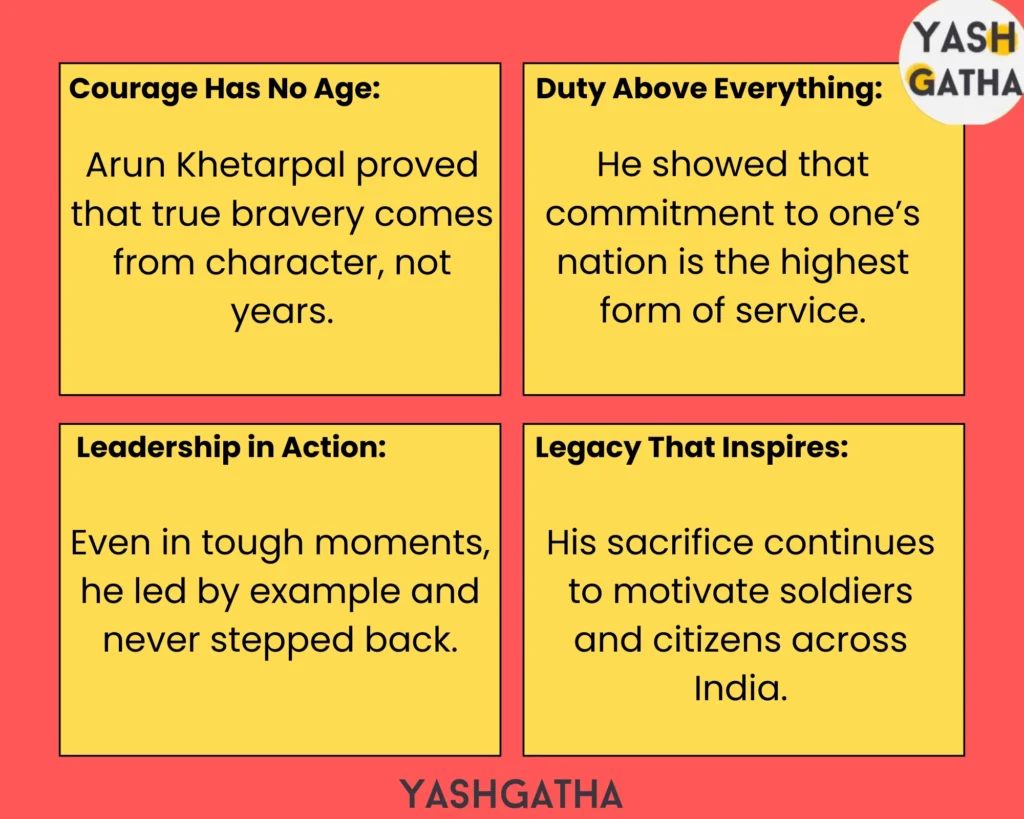
2nd Lt. Arun Khetarpal, a Pune-born officer of the Poona Horse Regiment, was awarded the Param Vir Chakra in 1971 for his extraordinary bravery in the Indo-Pak War, becoming one of India’s youngest and most inspiring military heroes. 2nd Lt. Arun Khetarpal, one of India’s youngest Param Vir Chakra awardees, became a national symbol of courage during the 1971 Indo-Pak War. At just 21, he led his tank into one of the fiercest battles of Basantar and refused to retreat despite overwhelming odds. His bravery, discipline, and unshakable commitment to duty turned him into a legend whose story continues to inspire millions.
Early Life & Challenges :
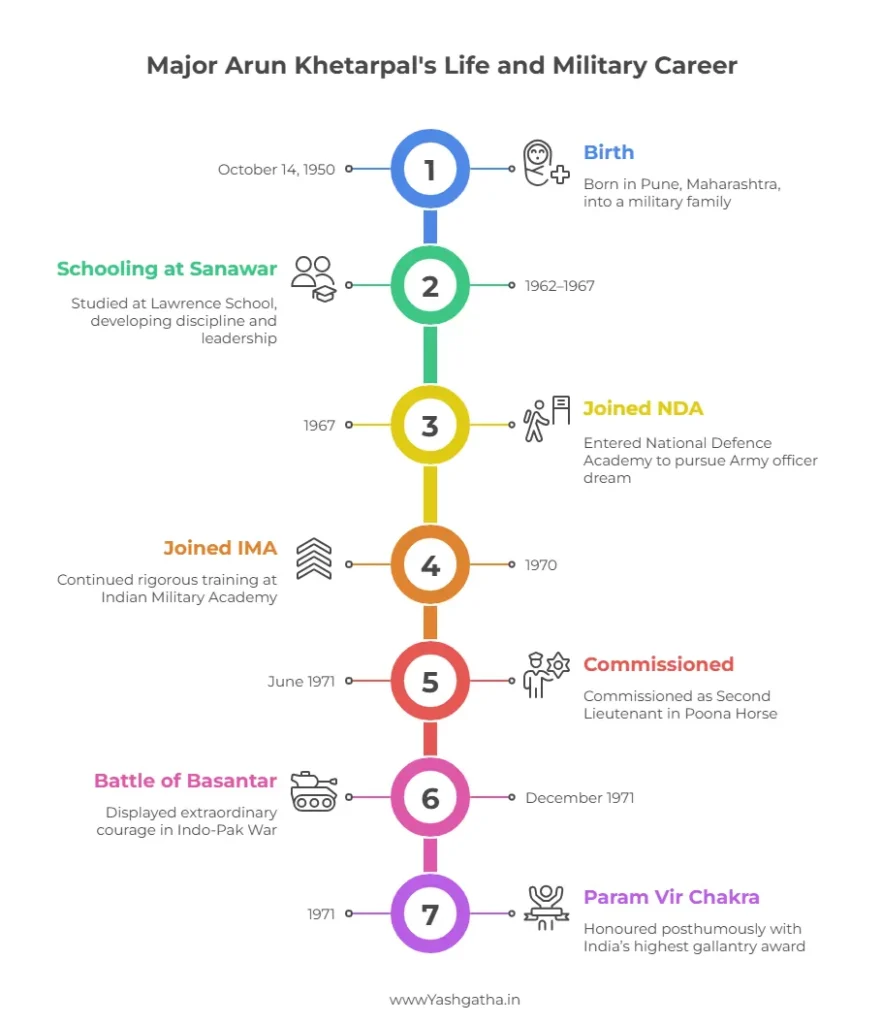
Arun Khetarpal was born on 14 October 1950 in Pune, Maharashtra, into a proud military family that valued discipline, integrity, and service to the nation. His father was an officer in the Indian Army, and growing up in a defence environment deeply shaped his character from childhood. Arun was naturally curious, intelligent, and highly energetic, but he also had to adjust early to the demanding lifestyle of a military household—frequent transfers, long periods away from his father, and strict discipline at home.
He studied at Lawrence School, Sanawar, one of India’s leading boarding schools, where life was not easy. The tough routines, academic pressure, and physical training pushed him to develop resilience and confidence. At Sanawar, he learned leadership, teamwork, and responsibility—qualities that would later define his life as a soldier. Though he missed home and family warmth, he channelled those emotions into becoming stronger and more independent.
After school, he joined the National Defence Academy (NDA), where the training became even more challenging. Arun faced intense physical drills, tight schedules, and high expectations from instructors. Many cadets struggled to cope, but Arun stood out for his discipline and willingness to push through hardship. He realised early that wearing the Army uniform came with immense responsibility, and he embraced every obstacle as a stepping stone.
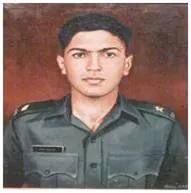
Later, at the Indian Military Academy (IMA), he continued to excel, overcoming pressure, long hours of field exercises, and the constant demand to improve as a future leader. Despite being young, he showed maturity, courage, and strong decision-making skills. Each challenge shaped him into a confident and determined officer, ready to serve his country with honour.
The Turning Point :
The Recognition & Award:
2nd Lt. Arun Khetarpal was honoured with the Param Vir Chakra, India’s highest wartime gallantry award, for his extraordinary courage during the 1971 Indo-Pak War, specifically the Battle of Basantar. At just 21, he demonstrated remarkable leadership, refusing to retreat even when heavily outnumbered in a fierce tank battle. His unwavering commitment to his regiment, his unbreakable spirit, and his determination to defend his position became the defining reasons for this recognition.
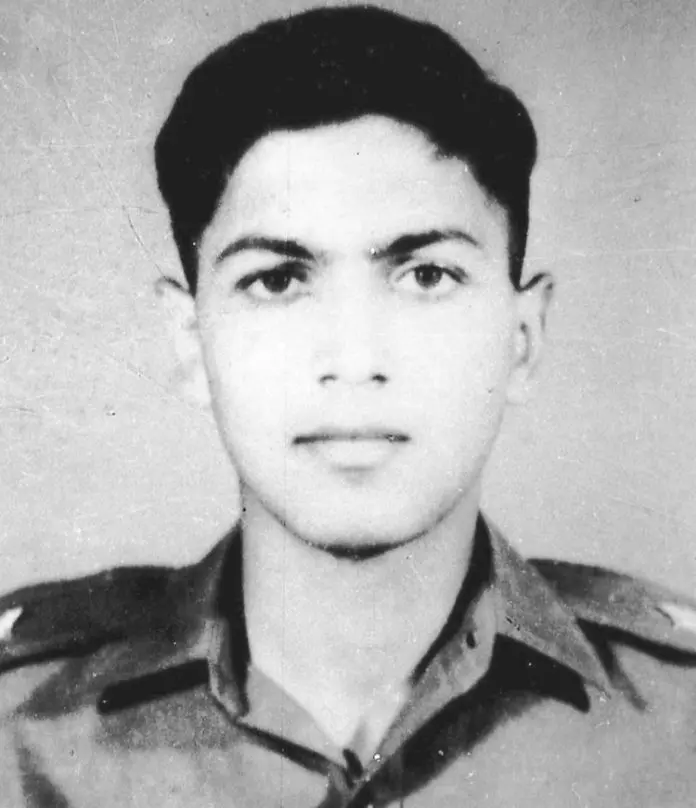
The official citation praised his “unmatched bravery, selfless devotion to duty, and supreme sacrifice in the face of overwhelming odds.” Today, his name stands among India’s greatest military heroes, inspiring generations of soldiers and citizens alike.
What Changed After the Award :
- National Icon of Bravery:
After receiving the Param Vir Chakra, his name became synonymous with courage and duty across India. - Inspiration for Future Soldiers:
His story is now taught in military academies, motivating young officers to serve with honor and fearlessness. - Legacy Honored Across India:
Schools, roads, hostels, and memorials were named after him to preserve his memory for future generations. - Poona Horse Regiment Pride:
His regiment continues to celebrate his bravery every year, keeping his spirit alive within the unit. - Featured in Books & Documentaries:
His life became part of military history, leadership studies, and inspirational storytelling in India. - Symbol of Youthful Valor:
His age—only 21—made him a powerful reminder that leadership and courage are defined by character, not years.
Yashgatha Takeaways:
Related posts:
 From a Small Village to the Param Vir Chakra: The Unbelievable Journey of Naik Jadunath Singh
 The Incredible True Story of Rama Raghoba Rane – India’s Legendary Param Vir Chakra Warrior
 The Untold Bravery of Lance Naik Karam Singh — India’s Lion of the 1948 War
 The Untold Story of Major Dhan Singh Thapa — The Hero Who Defended Pangong Against Impossible Odds