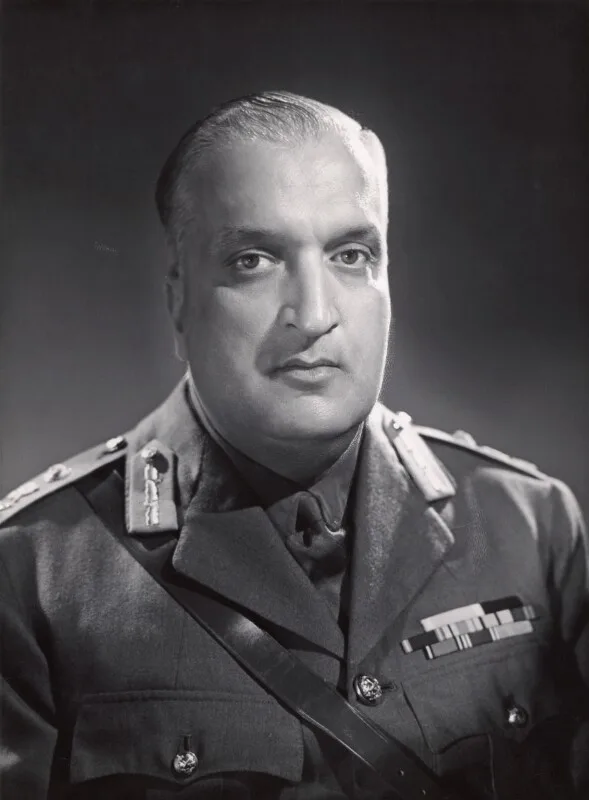
Maharaja Sir Hari Singh Bahadur (1895–1961) was the last ruling Maharaja of Jammu and Kashmir, best known for signing the Instrument of Accession in 1947 that integrated the princely state with independent India. Maharaja Hari Singh was the last ruling monarch of Jammu and Kashmir and one of the most important figures in modern Indian history. In 1947, at a time of political chaos and invasion, his single decision to sign the Instrument of Accession changed the destiny of an entire region. Admired by some and criticized by others, his life remains a powerful story of power, politics, controversy, and legacy.
Early Life & Challenges:
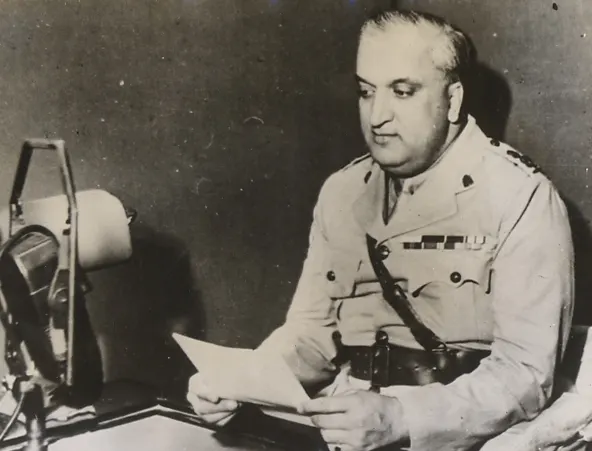
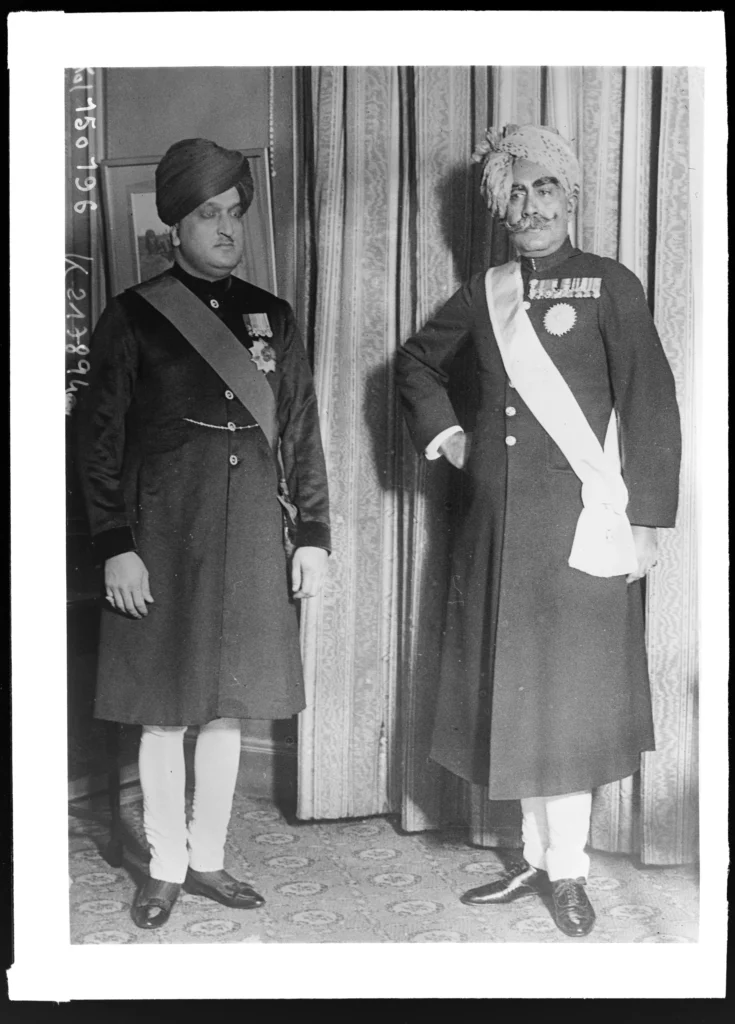
Maharaja Hari Singh was born in September 1895 at the historic Amar Mahal Palace in Jammu into the royal Dogra Rajput family. He was the only surviving son of Raja Amar Singh and the nephew of Maharaja Pratap Singh, the then ruler of Jammu and Kashmir. Since Maharaja Pratap Singh had no children, young Hari Singh was declared the heir to the throne from an early age. His upbringing was carefully planned to prepare him for future kingship. In 1903, he served as a page of honour to Lord Curzon at the grand Delhi Durbar, marking his first exposure to imperial politics. At the age of 13, he was sent to Mayo College, Ajmer, one of India’s most prestigious institutions, and later received formal military training at the Imperial Cadet Corps in Dehradun.
Life took a serious turn in 1909 when his father passed away. After this, the British administration took direct interest in his education and appointed Major H.K. Barr as his guardian. These years shaped his personality as a disciplined, confident, and firm young prince.
Despite royal privileges, Hari Singh faced several early challenges:
- Heavy expectations as the sole heir to the throne
- Strict British supervision over his training and conduct
- Political pressure within the princely state
- Growing social and communal tensions in Kashmir
- Limited administrative freedom under colonial influence
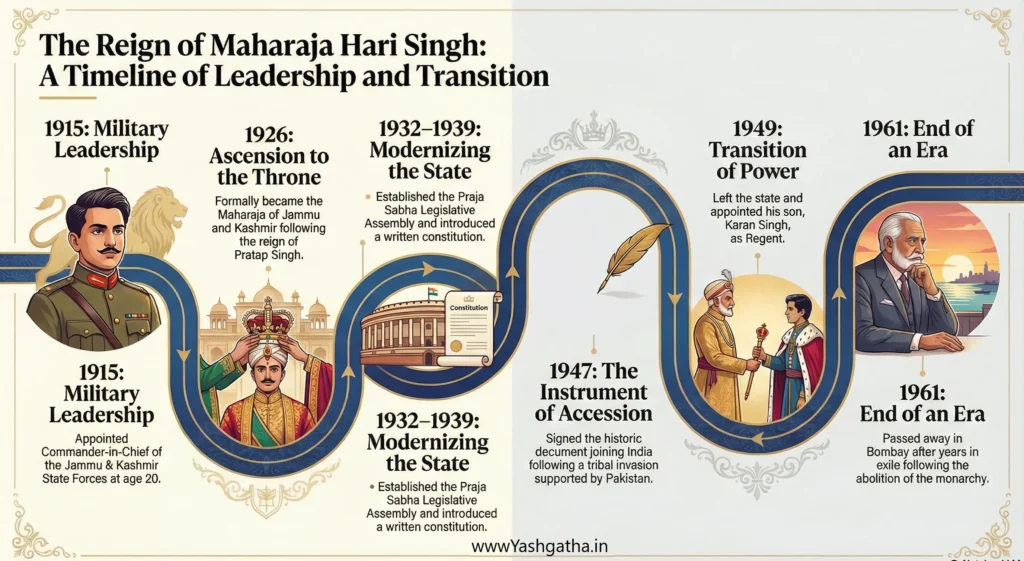
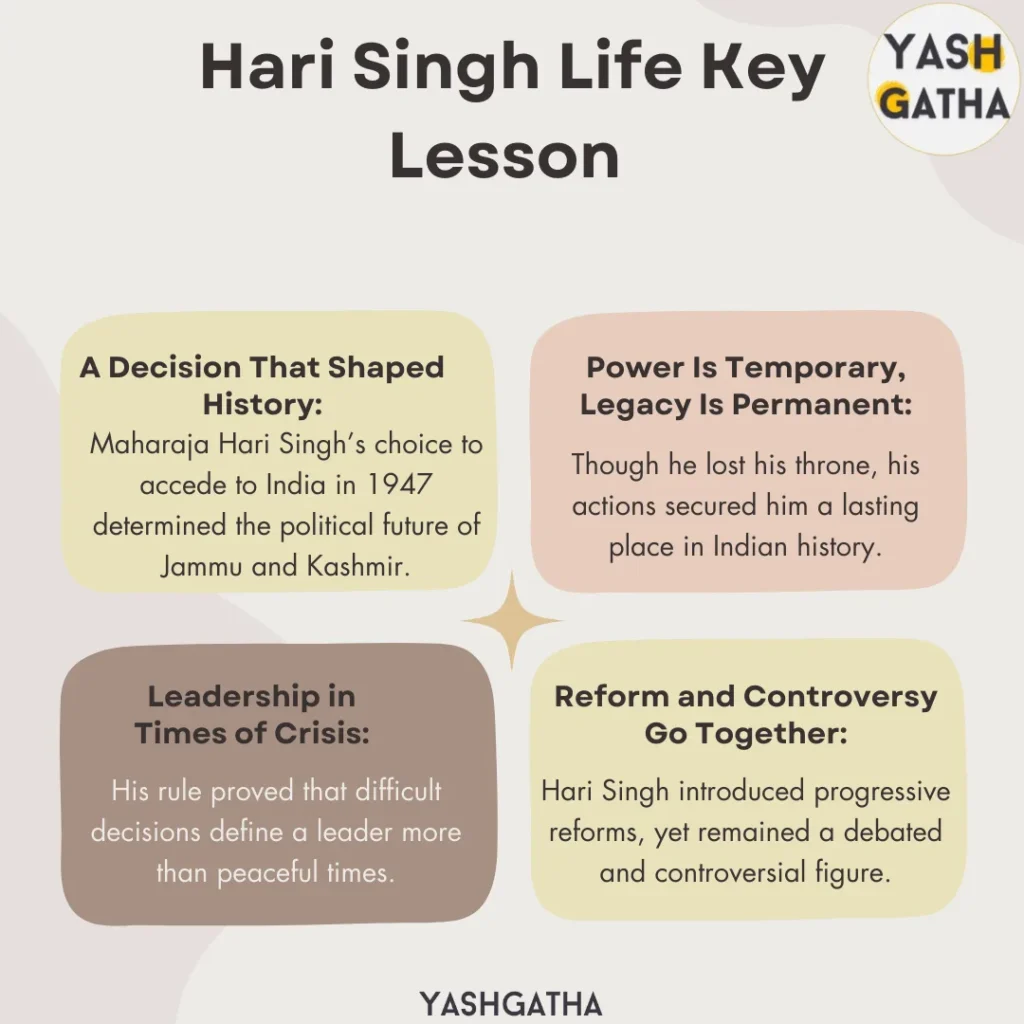
In 1915, he was appointed Commander-in-Chief of the Jammu & Kashmir State Forces, giving him early experience in leadership and governance. These formative years prepared him for the responsibilities of kingship—but they also placed him in the middle of complex political realities.
Turning Point:
The Recognition & Award:
Unlike military heroes, Maharaja Hari Singh was not recognized with gallantry medals or battlefield awards. His recognition came through history, politics, and the lasting impact of his decisions.
His most significant and historic recognition remains:
The Instrument of Accession – 26 October 1947
This single decision became the defining moment of his life. By signing the Instrument of Accession, Maharaja Hari Singh legally integrated Jammu and Kashmir with the Dominion of India during one of the most critical crises of Partition. This act earned him a permanent place in Indian history.
Major Recognitions of His Rule
During his reign, he was officially honored with several prestigious British titles:
- GCSI – Knight Grand Commander of the Order of the Star of India
- GCIE – Knight Grand Commander of the Order of the Indian Empire
- GCVO – Knight Grand Cross of the Royal Victorian Order
These titles reflected his status as an important princely ruler within the British Empire.
Recognition Through Reforms:
Maharaja Hari Singh is also remembered for:
- Making primary education compulsory in Jammu & Kashmir
- Introducing laws against child marriage
- Opening places of worship to lower caste communities
- Establishing the Praja Sabha Legislative Assembly
- Bringing constitutional and administrative reforms
- Encouraging modernization in transport, education, and governance
Although his rule was often surrounded by controversy and political unrest, historians recognize that he attempted to modernize the state and bring progressive changes.
A Controversial but Historic Legacy
After 1947, his political authority gradually declined. In 1949 he left Jammu & Kashmir, and in 1952 the monarchy was officially abolished. Yet, despite losing his throne, Maharaja Hari Singh remained one of the most discussed and debated figures in South Asian history.
What Changed After the Award:
After signing the Instrument of Accession in 1947, Maharaja Hari Singh gradually lost his political authority over Jammu and Kashmir. The Indian government took administrative control of the state, and his role as an independent monarch effectively came to an end. In 1949, he left Jammu and Kashmir permanently and appointed his son, Yuvraj Karan Singh, as the Regent. In 1952, the monarchy was officially abolished, bringing his royal rule to a formal conclusion. He spent the rest of his life in exile in Bombay until his death in 1961, remembered more as a historical figure than as a reigning king.
Yashgatha Takeaways:
Related posts:
 Major Jag Mohan Nath MVC: The Untold Story of a Braveheart Who Refused to Step Back
 Khushal Chand MVC: How One Brave Officer Became the ‘Saviour of Ladakh’
 Mohammad Usman MVC: The Untold Story of India’s Fearless ‘Lion of Kashmir’
 The Man Who Refused To Retreat: The Heroic Legacy Of Kishan Singh Rathor, MVC.