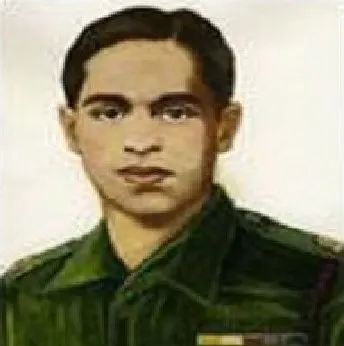
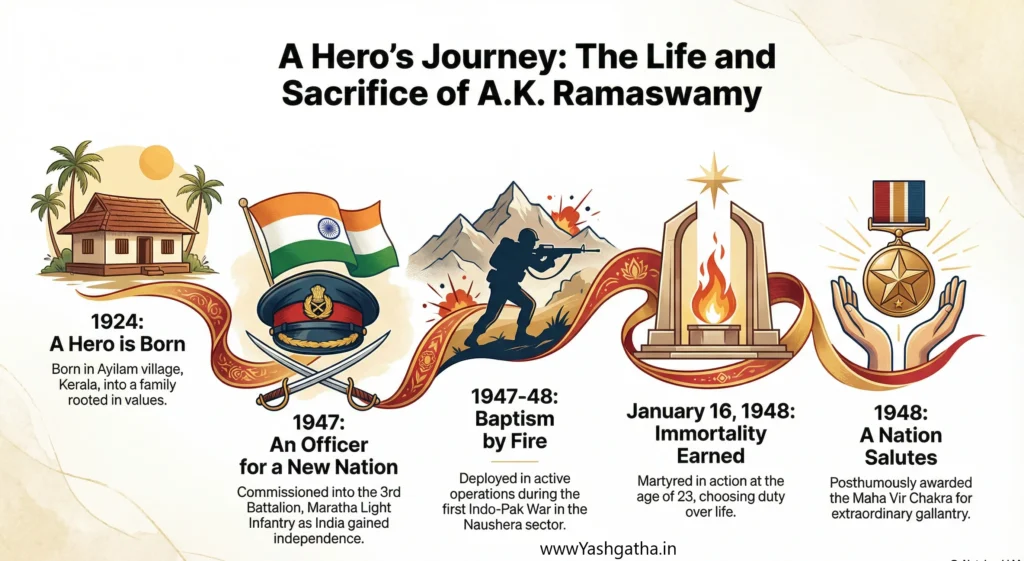
Major Annavi Krishnaswamy Ramaswamy, MVC (1924–1948), was an Indian Army officer from Ayilam village, Palghat, Kerala, who served with the 3rd Battalion, Maratha Light Infantry and was posthumously awarded the Maha Vir Chakra for his exceptional bravery during the 1947–48 Indo-Pak War, where he was martyred at Naushera at the age of 23.
In the chaos that followed India’s independence, when the nation was taking its first fragile steps, a young officer stood fearless on the frontlines. Major Annavi Krishnaswamy Ramaswamy, MVC, was only 23 years old when he led his men into battle during the 1947–48 Indo-Pak War. Coming from a small village in Kerala, he rose through courage, discipline, and an unshakable sense of duty. On 16 January 1948, at Naushera, he made the ultimate sacrifice for the country he loved. His life, though brief, became a timeless symbol of bravery, leadership, and devotion to India.
Early Life & Challenges:
Major Annavi Krishnaswamy Ramaswamy was born on 31 October 1924 in the quiet village of Ayilam in Palghat (now Palakkad), Kerala. Raised in a modest and disciplined environment, he grew up at a time when India itself was struggling for identity, dignity, and freedom. The values of simplicity, hard work, and respect were deeply rooted in his upbringing, and these early lessons shaped the man he would become.
From childhood, Ramaswamy showed signs of leadership, physical endurance, and emotional maturity beyond his years. He was known to be focused, responsible, and deeply influenced by stories of sacrifice and service. While many boys dreamed of comfort and stability, he was drawn to challenge and purpose. The idea of wearing the uniform was not about authority—it was about serving something greater than himself.
His journey into the armed forces was not easy. Military training demanded extreme discipline, mental toughness, and physical resilience. He faced long routines, strict standards, and the pressure of proving himself in a demanding institution. Coming from a small village, adapting to the rigorous life of an officer required sacrifice—distance from family, personal comfort, and the certainty of safety.Yet, it was in hardship that Ramaswamy thrived. He earned the respect of his instructors and peers through quiet determination, humility, and consistency. Every obstacle strengthened his resolve. Every challenge refined his leadership. These early struggles prepared him for the battlefield—where courage would no longer be a concept, but a daily decision.
Turning Point:
The Recognition & Award:
Major Annavi Krishnaswamy Ramaswamy’s courage on the battlefield did not go unnoticed. For his outstanding leadership and exceptional bravery during the 1947–48 Indo-Pak War, he was posthumously awarded the Maha Vir Chakra (MVC)—India’s second-highest gallantry decoration. The Maha Vir Chakra is conferred only for acts of conspicuous gallantry in the presence of the enemy, and Major Ramaswamy’s conduct embodied its very spirit. At a time when India was still a newly independent nation, his sacrifice became one of the early examples of the Indian Army’s unwavering commitment to protect the country at any cost.
The award was announced in 1948, ensuring that although he had laid down his life at Naushera on 16 January 1948, his bravery would forever remain recorded in the military history of India. His name stands today not just on honour rolls, but in the living tradition of the Indian Army—where his story continues to inspire soldiers, cadets, and citizens.
What Changed After the Award:
Although Major Annavi Krishnaswamy Ramaswamy was no longer alive to witness the honour, the Maha Vir Chakra transformed his sacrifice into a lasting national legacy.
After the Award, His Life Became a Legacy
- Immortalised in Indian military history as one of the early Maha Vir Chakra heroes of independent India.
- Remembered within the Maratha Light Infantry, where his courage is upheld as a model of battlefield leadership.
- Included in defence records, war histories, and honour rolls, preserving his story for future generations.
- A source of inspiration for Army aspirants, NCC cadets, and young Indians who dream of serving the nation.
- Commemorated through memorials and tributes, ensuring his name remains associated with sacrifice and honour.
- His story continues to educate and motivate citizens, reminding them that India’s freedom is protected by real heroes.
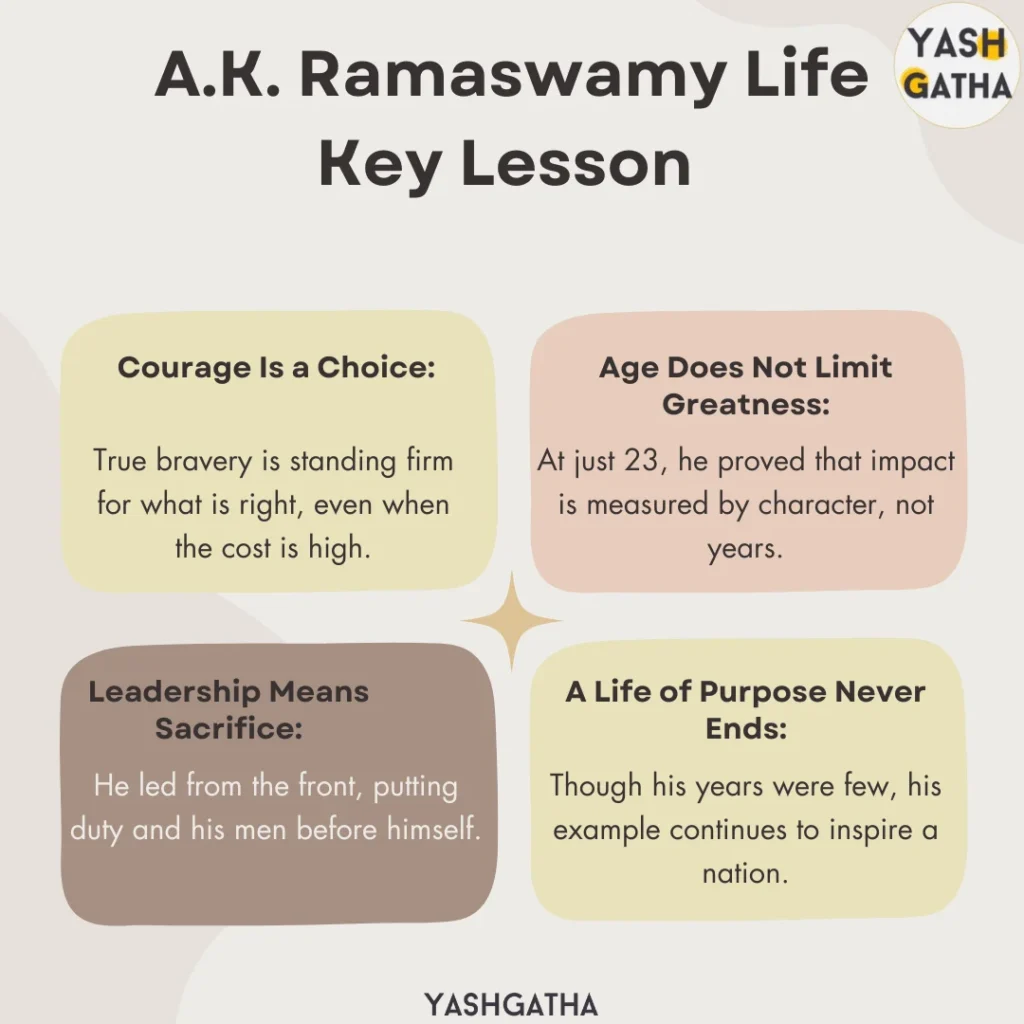
Yashgatha Takeaways:
Related posts:
 Major Jag Mohan Nath MVC: The Untold Story of a Braveheart Who Refused to Step Back
 The Untold Story of Subedar Bishan Singh: India’s Hero of the 1947 Kashmir War
 Khushal Chand MVC: How One Brave Officer Became the ‘Saviour of Ladakh’
 Mohammad Usman MVC: The Untold Story of India’s Fearless ‘Lion of Kashmir’