Lieutenant General Daya Ram Thapar, MVC, was a decorated war hero and visionary military leader who played a decisive role in the 1947–48 Jammu & Kashmir operations and later became one of the key architects of the modern Indian Army. In 1947, when a newborn nation was fighting for its survival, one man stood between chaos and control. Lieutenant General Daya Ram Thapar did not command from behind a desk — he led from the front, where every decision meant life, land, and the future of India. Awarded the Maha Vir Chakra for his fearless leadership in Jammu and Kashmir, Thapar’s journey from a young cadet to the Chief of the Army Staff is a story of courage, sacrifice, and nation-building that still echoes in the Indian Army today.
Early Life & Challenges:
Lieutenant General Daya Ram Thapar was born on 6 April 1894 in Dalhousie, Punjab, during a time when India was still under British rule. He grew up in a disciplined, education-oriented environment where service and responsibility were deeply valued. From an early age, Thapar showed a sharp mind, physical resilience, and a natural inclination toward leadership.
Lieutenant General Daya Ram Thapar was born on 6 April 1894 in Dalhousie, Punjab, during a time when India was still under British rule. He grew up in a disciplined, education-oriented environment where service and responsibility were deeply valued. From an early age, Thapar showed a sharp mind, physical resilience, and a natural inclination toward leadership. In 1916, during the turbulence of the First World War era, Thapar was commissioned into the British Indian Army. His early service exposed him to harsh terrains, long campaigns, and the unforgiving realities of soldiering. He served in difficult frontier regions and later during the Second World War, gaining operational experience that would quietly prepare him for greater responsibilities ahead.
However, his greatest challenges were not only military — they were historical. When India became independent in 1947, the subcontinent was torn by Partition, violence, and uncertainty. The Indian Army itself was being divided, reorganized, and rebuilt from scratch. Resources were scarce, command systems were new, and the country almost immediately faced armed conflict in Jammu and Kashmir. For Thapar, this period tested everything he had learned. He was no longer just an officer following orders — he had to help shape an army that represented a free nation. The pressure of defending a newborn country, guiding young soldiers, and making life-altering decisions in real time marked the most demanding phase of his early career.
Turning Point:
The Recognition & Award:
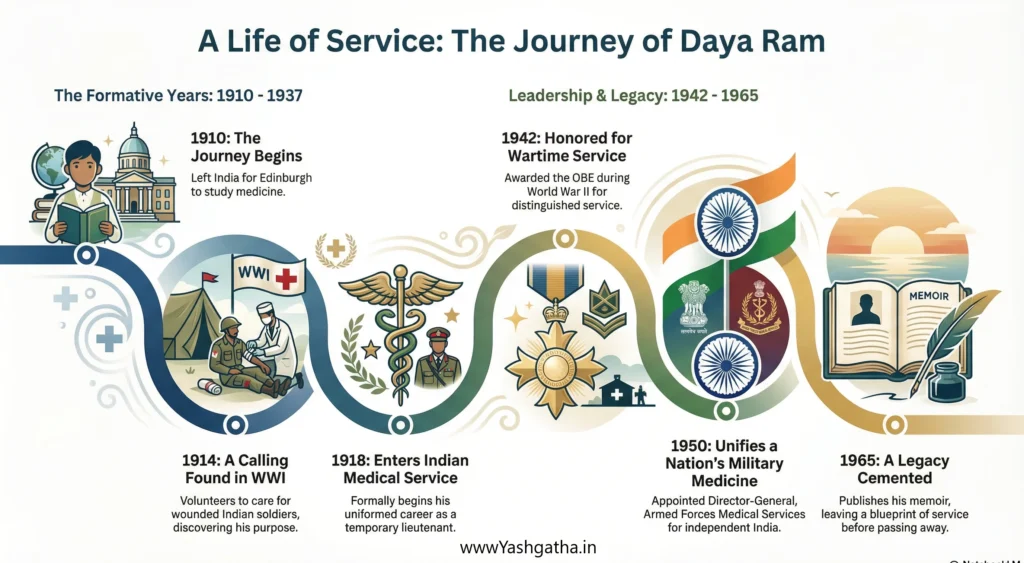
Lieutenant General Daya Ram Thapar was awarded the Maha Vir Chakra (MVC) in 1948 for his outstanding leadership, courage, and devotion to duty during the 1947–48 Jammu & Kashmir operations — India’s very first war after independence. At a time when the Indian Army was newly formed and operating under immense pressure, Thapar’s calm command, battlefield clarity, and fearless presence became a source of strength for both officers and soldiers. His actions during critical operations played a significant role in stabilizing key sectors and ensuring that Indian forces could hold their ground against determined opposition.
The Maha Vir Chakra, India’s second-highest gallantry award, recognized not only his bravery but also his exceptional ability to lead men in the most uncertain and dangerous conditions. He belonged to the first generation of Indian officers whose courage laid the foundation of India’s military honor system.
This section is ideal for your image gallery — you can place photographs of Lt Gen Thapar, his Maha Vir Chakra medal, war-time images, official citations, and rare archival pictures here to visually honor his legacy.
The award elevated him nationally, but more importantly, it marked him as one of the early pillars of independent India’s armed forces.
What Changed After the Award:
After receiving the Maha Vir Chakra in 1948, Lieutenant General Daya Ram Thapar’s journey shifted from being only a battlefield commander to becoming one of the key architects of India’s military future. The honor placed him among the nation’s most trusted leaders and opened the door to greater responsibilities.
Key Changes After the Maha Vir Chakra:
- Rise to the highest levels of command
He was entrusted with senior leadership roles that shaped national defense planning. - Voice in building a young nation’s Army
Played a major role in reorganizing and professionalizing the Indian Army after independence. - Appointment as Chief of the Army Staff (1961)
Reached the highest military office, leading the entire Indian Army. - Leadership during a national crisis (1962)
Headed the Army in one of the most challenging periods in India’s military history. - Focus on long-term strength, not just wars
Emphasized training standards, command structure, and operational preparedness. - From war hero to institution builder
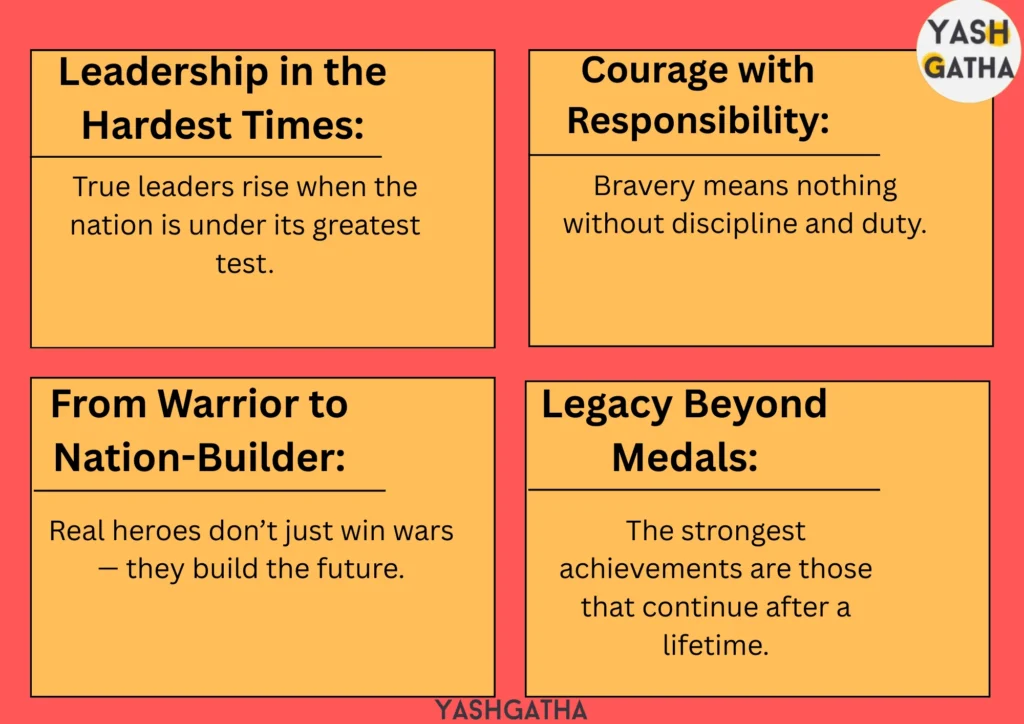
His influence moved beyond battlefields into shaping policies, systems, and future leadership.
Yashgatha Takeaways:
Related posts:
 Major Jag Mohan Nath MVC: The Untold Story of a Braveheart Who Refused to Step Back
 The Untold Story of Subedar Bishan Singh: India’s Hero of the 1947 Kashmir War
 Khushal Chand MVC: How One Brave Officer Became the ‘Saviour of Ladakh’
 Mohammad Usman MVC: The Untold Story of India’s Fearless ‘Lion of Kashmir’