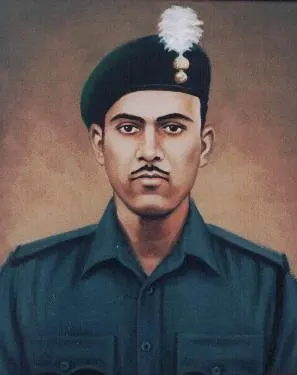
CQMH Abdul Hamid, an exceptional soldier from Dhamupur in Uttar Pradesh, earned India’s highest wartime gallantry award—the Param Vir Chakra in 1965—for displaying extraordinary courage and unmatched determination as a member of the Indian Army’s Grenadiers Regiment during the Indo-Pak War, making him one of the nation’s most celebrated military heroes.
CQMH Abdul Hamid was a soldier whose unmatched courage changed the course of the 1965 Indo-Pak War. Known for destroying enemy Patton tanks with extraordinary skill, he became a national symbol of bravery and sacrifice. His legacy, honored with the Param Vir Chakra, continues to inspire generations across India.
Early Life & Challenges :
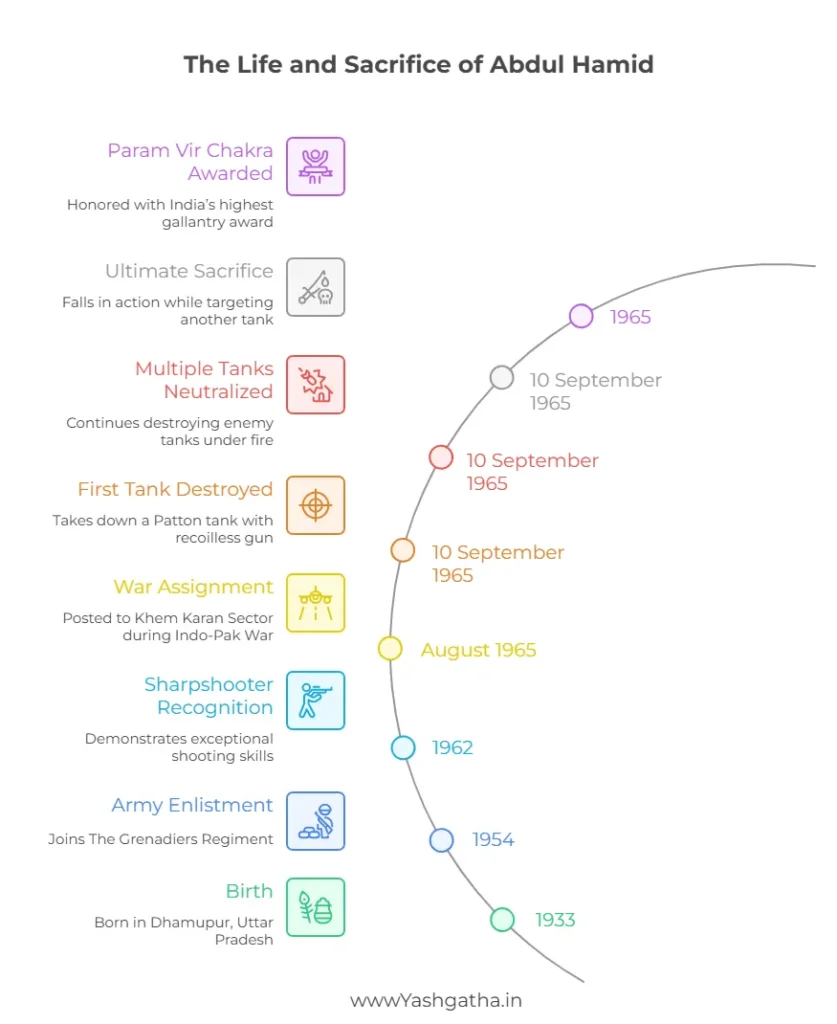
Abdul Hamid was born on July 1, 1933, in the quiet village of Dhamupur in Ghazipur, Uttar Pradesh. Raised in a humble family, his childhood was shaped by hard work, discipline, and a deep sense of responsibility. His father worked as a tailor, and young Abdul often helped with small household tasks, learning the value of dedication from an early age. Life in the village wasn’t easy—limited resources, long distances for school, and daily struggles were part of his routine, but they also built his inner strength.
From a young age, Abdul Hamid showed remarkable focus and a natural inclination toward discipline. He admired soldiers who occasionally passed through nearby areas, and their uniforms, confidence, and dignity inspired him. Despite financial difficulties, he nurtured a dream of serving the nation. His determination pushed him to work harder, stay physically active, and develop a sharp mind. As he grew older, he faced the challenge of balancing family responsibilities with his ambition to join the Army. But instead of giving up, he used these hardships as motivation. His resilience, sincerity, and quiet confidence set him apart from others his age.

When he finally got the chance to enlist in the Indian Army’s Grenadiers Regiment, he embraced the opportunity with full dedication, ready to rise above every obstacle. These early life struggles—poverty, limited resources, and a tough rural upbringing—did not weaken him. Instead, they shaped him into the disciplined, courageous, and determined soldier the nation would one day revere.
Turning point :
The Recognition & Award:
CQMH Abdul Hamid’s bravery during the 1965 Indo-Pak War stunned the world and became one of the most inspiring chapters in India’s military history. Armed with only a recoilless gun, he destroyed multiple enemy Patton tanks, turning the tide of the Battle of Asal Uttar. His fearless charge against heavily armored machines showed not just skill, but unshakeable courage and devotion to duty.
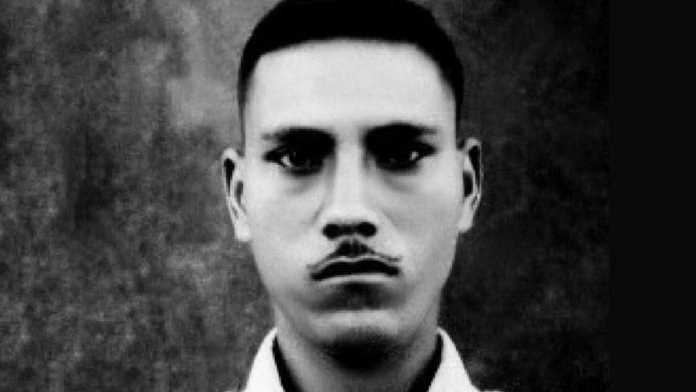
In recognition of this extraordinary valor, Abdul Hamid was awarded the Param Vir Chakra, India’s highest wartime gallantry award. The honor was bestowed posthumously, ensuring that his name would forever shine among India’s greatest heroes. His story continues to be taught in military academies, celebrated in national ceremonies, and remembered by generations who draw inspiration from his sacrifice.
What Changed After the Award :
After receiving the Param Vir Chakra, CQMH Abdul Hamid’s legacy grew far beyond the battlefield. His courage became a symbol of national pride, inspiring millions across the country. Here are the key changes and honors that followed:
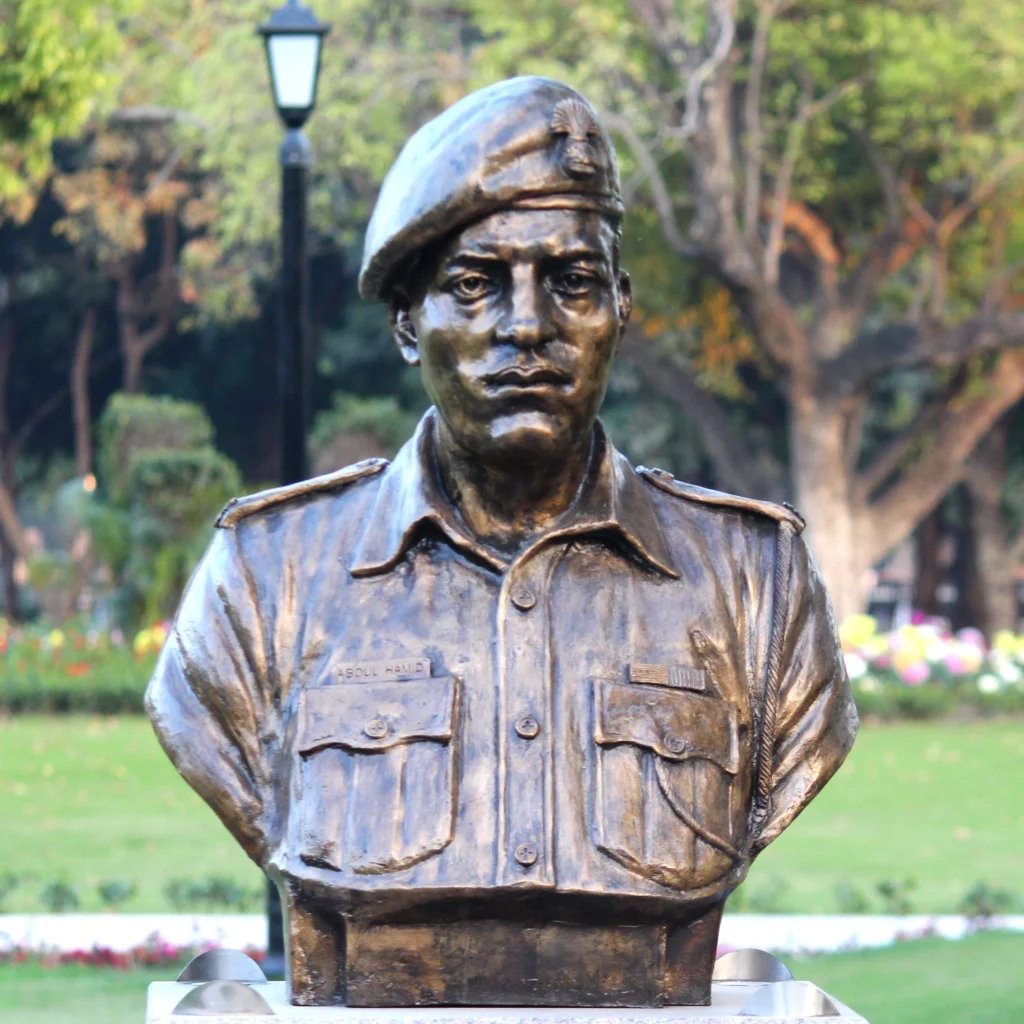
- Dhamupur village renamed to “Hamidpur” in his memory, turning his hometown into a place of national significance.
- Memorials and statues were established across India, especially in military areas, to honor his bravery.
- Schools and institutions incorporated his story into textbooks, ensuring every young student learns about his heroism.
- The Indian Army celebrates him every year, especially during regimental ceremonies and national military events.
- His bravery became part of Army training lessons, motivating new soldiers to serve with courage and discipline.
- Government and public events pay tribute to him on national days like Independence Day and Republic Day.
- His family received national recognition, with continued respect and honor from the armed forces.
- Media, documentaries, and books frequently highlight his role in the 1965 war, keeping his story alive for future generations.
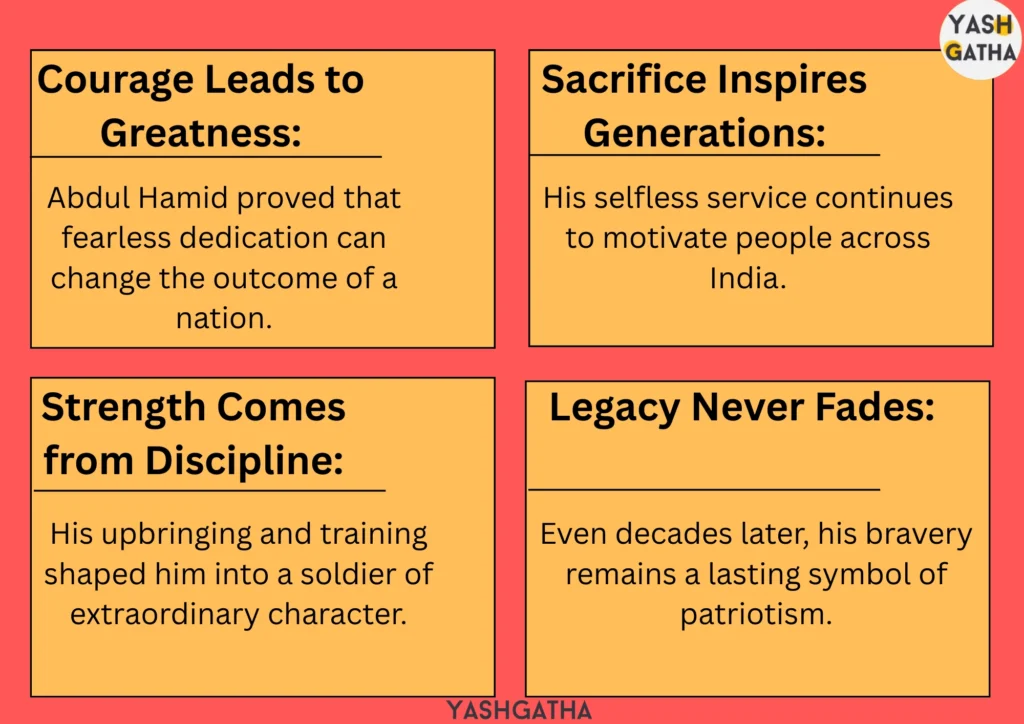
Yashgatha Takeaways: