India’s journey of nation-building has been shaped by countless visionaries — leaders, thinkers, artists, scientists, and humanitarians who dedicated their lives to the service of the nation. To recognise such extraordinary contributions, the Bharat Ratna, India’s highest civilian award, was instituted in 1954.
Unlike the Padma Awards, the Bharat Ratna holds a special status: it is conferred for exceptional service of the highest order, without distinction of race, occupation, position, or gender. Over the decades, this prestigious award has honoured a select group of individuals whose work has transformed India’s identity at home and abroad.
🏅 About the Bharat Ratna
- Established: 1954
- Nature of the Award: Highest civilian honour of India
- Eligibility: Awarded for exceptional service in any field of human endeavour
- Awarded By: The President of India
- Frequency: Not annual — conferred at the discretion of the Government of India
- Number of Awardees (till 2025): 50+ recipients
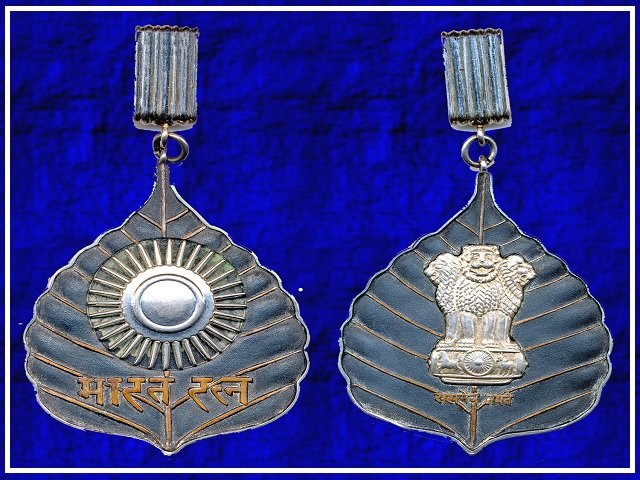
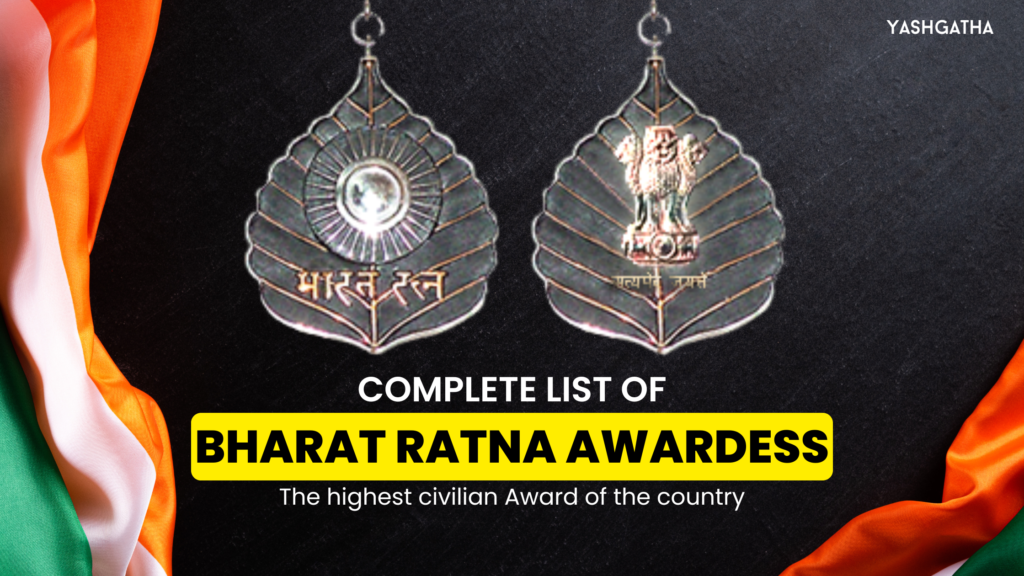
The Bharat Ratna medal is shaped like a peepal leaf, symbolising wisdom and enlightenment, with the sunburst and the words “Bharat Ratna” inscribed in Devanagari script. The reverse features the State Emblem of India and the motto Satyameva Jayate.
🌟 Significance of the Bharat Ratna
The Bharat Ratna is more than just a decoration — it is a national acknowledgment of service that has left a permanent mark on India’s history and future. While recipients do not receive monetary rewards, they enjoy:
- Prestige & recognition nationwide and globally
- A state protocol ranking (seventh in order of precedence)
- The right to use the title “Bharat Ratna Awardee”
What makes it unique is that it is not limited to Indian citizens — foreigners like Nelson Mandela and Mother Teresa have also been honoured for their universal contributions.
📜 Complete Bharat Ratna Awardees List (1954–2025)
Below is the comprehensive, fact-checked list of Bharat Ratna recipients from 1954 to 2025. The awardees represent diverse fields including politics, social reform, literature, science, sports, and humanitarian service.
|
Year |
Recipient Name |
Field |
State |
Profession |
Description |
|
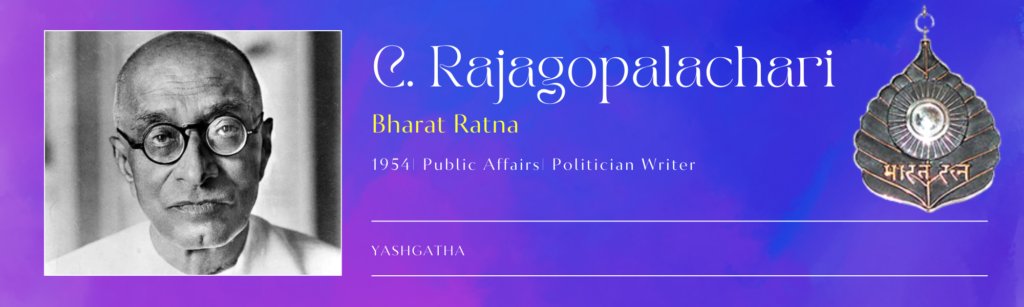
1954 |
Public Affairs |
Tamil Nadu |
Politician, Writer |
Last Governor-General of India, freedom fighter, and founder of the Swatantra Party. |
|
|
1954 |
Education |
Tamil Nadu |
Philosopher, Statesman |
Renowned philosopher, first Vice President, and second President of India. |
|
|
1954 |
Science |
Tamil Nadu |
Physicist |
Nobel laureate known for the Raman Effect in physics. |
|
|
1955 |
Literature |
Uttar Pradesh |
Philosopher, Educationist |
Scholar and independence activist, associated with the Theosophical Society. |
|
|
1955 |
Engineering |
Karnataka |
Engineer, Statesman |
Eminent engineer and Diwan of Mysore, known for his contributions to public works. |
|
|
1955 |
Public Affairs |
Uttar Pradesh |
Politician, Writer |
First Prime Minister of India and a central figure in Indian politics before and after independence. |
|
|
1957 |
Govind Ballabh Pant |
Public Affairs |
Uttarakhand |
Lawyer, Politician |
Freedom fighter and Home Minister, known for his role in the Indian independence movement and post-independence politics. |
|
1958 |
Dhondo Keshav Karve |
Social Work |
Maharashtra |
Social Reformer, Educator |
Prominent social reformer known for his work in women’s education and upliftment. |
|
1961 |
Bidhan Chandra Roy |
Medicine |
West Bengal |
Physician, Politician |
Noted physician and second Chief Minister of West Bengal. |
|
1961 |
Purushottam Das Tandon |
Public Affairs |
Uttar Pradesh |
Freedom Fighter, Educator |
Independence activist and educator, known for his efforts in promoting Hindi as a national language. |
|
1962 |
Dr. Rajendra Prasad |
Public Affairs |
Bihar |
Lawyer, Politician |
First President of India and a key leader during the Indian independence movement. |
|
1963 |
Zakir Husain |
Education |
Telangana |
Educationist, Politician |
Third President of India and co-founder of Jamia Millia Islamia University. |
|
1963 |
Pandurang Vaman Kane |
Literature |
Maharashtra |
Indologist, Sanskrit Scholar |
Renowned Sanskrit scholar and author of the monumental work “History of Dharmaśāstra”. |
|
1966 |
Lal Bahadur Shastri |
Public Affairs |
Uttar Pradesh |
Politician |
Second Prime Minister of India, known for his leadership during the Indo-Pakistan War of 1965. |
|
1971 |
Indira Gandhi |
Public Affairs |
Uttar Pradesh |
Politician |
First and, to date, only female Prime Minister of India. |
|
1975 |
V.V. Giri |
Public Affairs |
Odisha |
Trade Unionist, Politician |
Fourth President of India and a prominent trade union leader. |
|
1976 |
K. Kamaraj |
Public Affairs |
Tamil Nadu |
Politician |
Influential Indian politician and former Chief Minister of Tamil Nadu. |
|
1980 |
Mother Teresa |
Social Work |
West Bengal |
Nun, Missionary |
Founder of the Missionaries of Charity, known for her humanitarian work in Kolkata. |
|
1983 |
Vinoba Bhave |
Social Work |
Maharashtra |
Social Reformer |
Leader of the Bhoodan movement, advocating for land redistribution. |
|
1987 |
Khan Abdul Ghaffar Khan |
Social Work |
Pakistan |
Political Leader |
Prominent freedom fighter, known as the “Frontier Gandhi” for his non-violent opposition to British rule. |
|
1988 |
M.G. Ramachandran |
Public Affairs |
Tamil Nadu |
Actor, Politician |
Popular actor and Chief Minister of Tamil Nadu. |
|
1990 |
B.R. Ambedkar |
Public Affairs |
Maharashtra |
Jurist, Social Reformer |
Principal architect of the Indian Constitution and champion of Dalit rights. |
|
1990 |
Nelson Mandela |
Public Affairs |
South Africa |
Anti-Apartheid Leader |
Leader in the anti-apartheid movement and former President of South Africa. |
|
1991 |
Rajiv Gandhi |
Public Affairs |
Uttar Pradesh |
Politician |
Youngest Prime Minister of India, known for his efforts in modernizing the country. |
|
1991 |
Vallabhbhai Patel |
Public Affairs |
Gujarat |
Freedom Fighter, Politician |
First Deputy Prime Minister and Home Minister of India, known as the “Iron Man” for his role in unifying the nation. |
|
1991 |
Morarji Desai |
Public Affairs |
Gujarat |
Politician |
Fourth Prime Minister of India and a prominent freedom fighter. |
|
1992 |
Abul Kalam Azad |
Education |
West Bengal |
Scholar, Freedom Fighter |
First Minister of Education in independent India and a prominent freedom fighter. |
|
1992 |
J.R.D. Tata |
Trade & Industry |
Maharashtra |
Industrialist, Philanthropist |
Pioneer of Indian aviation and former chairman of Tata Group. |
|
1992 |
Satyajit Ray |
Arts |
West Bengal |
Filmmaker |
Renowned filmmaker and author, known for his contributions to Bengali cinema. |
|
1997 |
Gulzarilal Nanda |
Public Affairs |
Punjab |
Economist, Politician |
Interim Prime Minister of India and a noted economist. |
|
1997 |
Aruna Asaf Ali |
Public Affairs |
Haryana |
Freedom Fighter |
Prominent independence activist, known for hoisting the Indian National Congress flag during the Quit India Movement. |
|
1997 |
A. P. J. Abdul Kalam |
Science & Engineering |
Tamil Nadu |
Scientist |
Known as the “Missile Man of India”; played a key role in India’s nuclear and missile programs; later became the President of India. |
|
1998 |
M. S. Subbulakshmi |
Arts |
Tamil Nadu |
Carnatic Vocalist |
Renowned Carnatic vocalist, first musician to receive the Bharat Ratna. |
|
1998 |
Chidambaram Subramaniam |
Public Affairs |
Tamil Nadu |
Politician |
Architect of India’s Green Revolution, former Minister of Agriculture. |
|
1999 |
Jayaprakash Narayan |
Public Affairs |
Bihar |
Social Reformer, Politician |
Leader of the “Total Revolution” movement, instrumental in opposing the Emergency. |
|
1999 |
Amartya Sen |
Literature & Education |
West Bengal |
Economist, Philosopher |
Nobel laureate in Economics, known for his work on welfare economics and social justice. |
|
1999 |
Gopinath Bordoloi |
Public Affairs |
Assam |
Politician |
First Chief Minister of Assam, played a key role in keeping Assam united with India during partition. |
|
1999 |
Ravi Shankar |
Arts |
Uttar Pradesh |
Sitar Maestro |
World-renowned sitar virtuoso, known for popularizing Indian classical music globally. |
|
2001 |
Lata Mangeshkar |
Arts |
Maharashtra |
Playback Singer |
Legendary playback singer, often referred to as the “Nightingale of India.” |
|
2001 |
Bismillah Khan |
Arts |
Uttar Pradesh |
Shehnai Maestro |
Eminent shehnai player, credited with elevating the instrument’s status in classical music. |
|
2009 |
Bhimsen Joshi |
Arts |
Karnataka |
Hindustani Vocalist |
Celebrated Hindustani classical vocalist, known for his khayal singing. |
|
2014 |
C. N. R. Rao |
Science & Engineering |
Karnataka |
Chemist |
Noted chemist with significant contributions to solid-state and structural chemistry. |
|
2014 |
Sachin Tendulkar |
Sports |
Maharashtra |
Cricketer |
Iconic cricketer, the first sportsperson to receive the Bharat Ratna. |
|
2015 |
Madan Mohan Malaviya |
Education |
Uttar Pradesh |
Educationist, Politician |
Founder of Banaras Hindu University, a prominent figure in the Indian independence movement. |
|
2015 |
Atal Bihari Vajpayee |
Public Affairs |
Madhya Pradesh |
Poet, Politician |
Former Prime Minister of India, known for his oratory skills and political acumen. |
|
2019 |
Pranab Mukherjee |
Public Affairs |
West Bengal |
Politician |
Former President of India, with a long career in public service and politics. |
|
2019 |
Nanaji Deshmukh |
Social Work |
Maharashtra |
Social Activist |
RSS leader and social activist, known for his work in rural development. |
|
2019 |
Bhupen Hazarika |
Arts |
Assam |
Singer, Lyricist, Filmmaker |
Celebrated Assamese singer, lyricist, and filmmaker, known for his baritone voice and compositions. |
|
2024 |
Karpoori Thakur |
Public Affairs |
Bihar |
Politician, Social Reformer |
Former Chief Minister of Bihar, known for his advocacy for the underprivileged. |
|
2024 |
L. K. Advani |
Public Affairs |
Gujarat |
Politician |
Senior political leader, former Deputy Prime Minister of India. |
|
2024 |
P. V. Narasimha Rao |
Public Affairs |
Telangana |
Politician |
Former Prime Minister of India, known for initiating economic liberalization. |
|
2024 |
Charan Singh |
Public Affairs |
Uttar Pradesh |
Politician |
Former Prime Minister of India, known for his focus on farmers’ rights and agriculture. |
|
2024 |
M. S. Swaminathan |
Science & Agriculture |
Tamil Nadu |
Agricultural Scientist |
Father of India’s Green Revolution, renowned for his contributions to agriculture and food security. |
🧩 Notable Highlights Over the Years
- First Recipients (1954): C. Rajagopalachari, Dr. Sarvepalli Radhakrishnan, and Dr. C. V. Raman
- First Woman Recipient (1971): Indira Gandhi
- Posthumous Awards: First conferred on Lal Bahadur Shastri in 1966
- Foreign Recipients: Nelson Mandela, Mother Teresa, Khan Abdul Ghaffar Khan
- Sports Personalities: Sachin Tendulkar became the youngest recipient in 2014
- Recent Recipients (2025): (Update with the latest awardees announced this year)
🏆 Why the Bharat Ratna Matters
Each name in the Bharat Ratna list reflects a story of courage, sacrifice, and excellence. These individuals are more than awardees; they are symbols of India’s values, diversity, and aspirations.
The Bharat Ratna remains a timeless reminder that service to humanity and the nation transcends politics, boundaries, and generations.